
Loading
Search
We hope you found what you are searching for. If not, contact us and let us know what your want. We will do the work for you and get back to you when we're done.
iberian ham - Knowledge Search
Top 27 articles found
Displaying 21-27 | << Prev 20
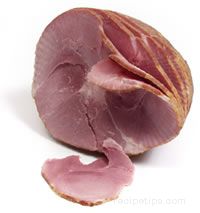
Contamination Prevention | Cooking Safety | Proper Storage
When working with pork it is essential that the meat is handled and stored properly to ensure safety. You cannot see the harmful bacteria on the meat so you must handle it as if it is present.
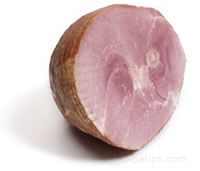
This type of ham can be a
butt or shank portion or it could be a whole or half leg that has
the hip, thigh and/or shank bone remaining as part of the ham.

Pork production today has drastically changed to produce much leaner meat
than what it did 25 years ago. Better breeding and feeding of the hogs
and a grading system that stimulates the meat packers to trim more of
the external fat than they did in the past has resulted in leaner meat.
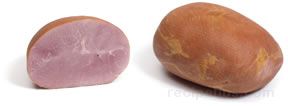
Also known as boned ham, this whole cured ham is a cut of pork that
has had the hip, thigh, and shank bones removed, as well as most of
the fat before it is rolled, molded, and packaged.
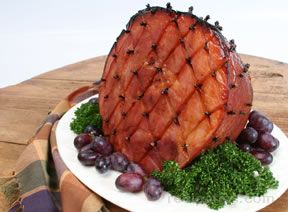
hamrecipes
A precooked ham that has been
pre-sliced by spiral cutting in order to make it convenient for serving
the ham slices.
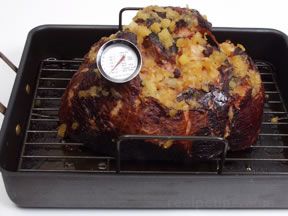
Checking Doneness
When checking doneness it can be accomplished in basically the same manner for whatever cooking method you are using. There are several methods that can be used, but some are more accurate than others.
Top 27 articles found
Displaying 21-27 | << Prev 20


Advertisement
Advertisement