
Loading
Search
We hope you found what you are searching for. If not, contact us and let us know what your want. We will do the work for you and get back to you when we're done.
grilled pork - Knowledge Search
Top 75 articles found
Displaying 21-40 | << Prev 20 | Next 20 >>

Pork producers today have significantly changed production methods to produce much leaner meat than 25 years ago. Better breeding and feeding of the hogs and a grading system that stimulates the meat packers to trim more of the external fat than they did in the past has resulted in leaner meat.
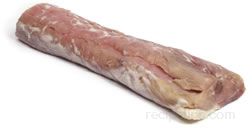
Contamination Prevention | Cooking Safety | Proper Storage
When working with pork it is essential that the meat is handled and stored properly to ensure safety. You cannot see the harmful bacteria on the meat so you must handle it as if it is present.
Microwaving is a quick and convenient method of cooking pork. When cooked properly in the microwave, the results will be a juicy, tender cut of pork. Although the flavor of the meat will not be enhanced as it is with other cooking methods, such as frying, grilling, sautéing, stir-frying and roasting, pork has the ability to absorb flavors, so its taste can be enhanced by the use of many herbs, spices and other flavorings.
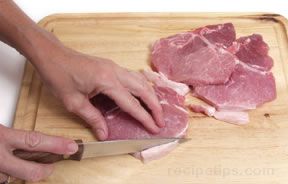
Frying is a dry heat cooking method, which is a quick and simple way of cooking pork. It can be accomplished by the use of two different methods, pan-frying and deep frying.
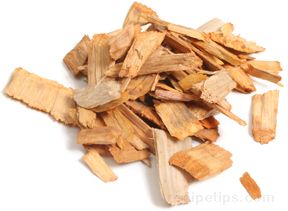
A wide range of woods are suitable for grilling and smoking food. Hardwoods are much better to use than softwoods because hardwoods burn longer and provide more heat. Hardwoods also add more flavor to foods because of the aromatic smoke that is produced as the wood burns.
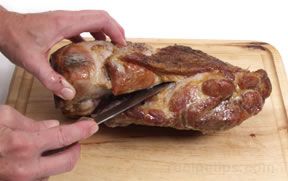
The larger pork cuts will need to be carved into smaller pieces for serving. Before carving, the meat should stand for 10 to 15 minutes after it is removed from the heat source.
Fresh or thawed pork does not require rinsing before it is cooked because any bacteria on the surface of the meat will be destroyed during the cooking process. Chops and steaks sometimes benefit from being briefly rinsed in cold water to rinse away bone grindings that may occur when the chops and steaks are cut apart.
Shopping Tips | Thawing Tips | Refrigerating Tips | Freezing TipsHandling and Safety Tips | Marinating Tips | Stuffing Tips | Trimming & Slicing TipsChecking Doneness | Roasting Tips | Frying Tips | Grilling & Broiling TipsSteaming Tips | Stir-fry Tips | Tenderness Tips | Light Tips | Cooking Tips
Shopping Tips:
Decide how much time and effort you want to use in preparing and cooking the cut you select.
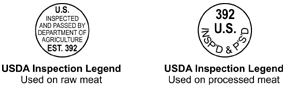
Tips on Selecting Cuts | Terms | Description of Cuts | Inspection and GradingRead the Label | Look and Feel | Quantity to Buy | Purchasing in Quantity
When shopping for pork there are several things that you need to consider so that you will be assured of purchasing the correct quantity, quality and type of pork to satisfy your needs.
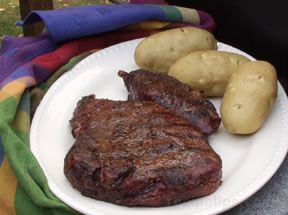
Guidelines for Proper Doneness
The proper doneness of foods cooked with rotisserie grilling is determined by a number of criteria depending on the type of food that will be cooked and the size and density of the food.
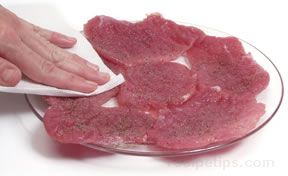
Sautéing is a dry heat cooking method that quickly cooks the pork using a little oil and high heat. The types of pork best suited for sautéing are the more tender lean cuts, such as loin chops, tenderloin medallions, cutlets, and ground patties.
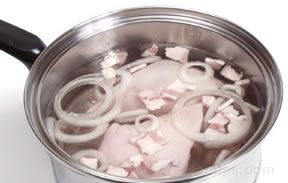
Poaching is a moist heat method of cooking. It is also a healthy method of cooking pork because no fat is added during the cooking process. It retains the flavor, tenderness and moisture through a gentle simmering process.
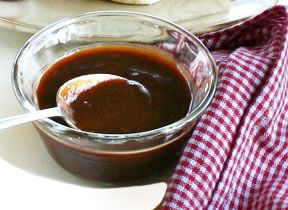
Top off your grilled meats and poultry with the original flavor of homemade barbecue sauce. RecipeTips.com has a selection to suit almost any type of grilled pork or beef ribs, burgers, pulled meat sandwiches, chicken, or even appetizers and side dishes.
Stir-frying, like sautéing, is a dry heat cooking method that quickly cooks the pork in a small amount of oil, using high heat. The difference between the two methods is that sautéing cooks pieces of meat that are about the size of a serving portion and stir-frying involves cooking smaller pieces of food that have been cut into small strips or cubes all similar in size.
Steaming is a moist heat method of cooking. It results in tender and moist meat through the use of steam. When steaming meat, minimum shrinkage occurs, and it is one of the most healthy methods of cooking because no additional fat is used.
There are numerous pork products available, consisting of fresh, frozen, cured, smoked, uncooked, fully cooked, and many heat-n-serve products. Some products are available breaded, seasoned or marinated.
Tenderness Tips
Avoid freezing whenever possible to eliminate moisture loss that occurs during thawing. The moisture loss in thawing results in less tender meat.
Keep pork from drying out in the refrigerator by keeping it tightly wrapped.
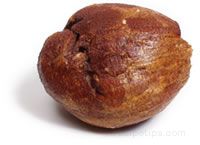
Hams
Hams are cuts of pork that come from the leg, which have been dry-cured and smoked (country hams) or wet-cured and then boiled or smoked (city hams). The dry-cured hams are saltier, stronger flavored and have a coarser texture.
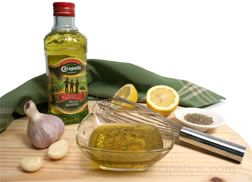
Marinating | Marinades | Rubs | Rub Spices and Seasonings
Marinating
Soaking various cuts of meat in a marinade is a good method for adding flavor as well as helping to tenderize the meat.
Marinating | Marinades | Rubs | Rub Spices and Seasonings
Marinating
Soaking various cuts of meat in a marinade is a good method for adding flavor as well as helping to tenderize the meat.
Top 75 articles found
Displaying 21-40 | << Prev 20 | Next 20 >>


Advertisement
Advertisement