
Loading
Search
We hope you found what you are searching for. If not, contact us and let us know what your want. We will do the work for you and get back to you when we're done.
bread flour - Knowledge Search
Top 87 articles found
Displaying 21-40 | << Prev 20 | Next 20 >>
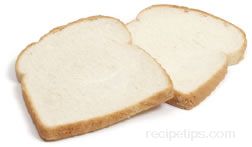
Nutritional Profile of Bread | Significance of Enriched White Bread | Gluten
Nutritional Profile of Bread
The nutritional profiles for the breads listed below represent average profiles for each type of bread.
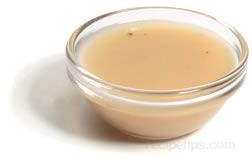
Flour Used as a Thickening Agent | Frying | Deep-Frying | Baking
Flour Used as a Thickening Agent
Flour is one of the most often used thickening agents when cooking foods such as sauces, gravies, soups, stews, and gumbos.
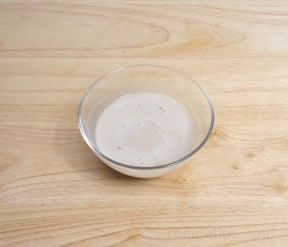
Bread Making Demonstration:Basic Bread
Cottage Loaf
There are many variations of ingredients that can be used when preparing the uniquely shaped cottage loaf. It can be made as a whole wheat bread or a combination of whole grain flours can be used.
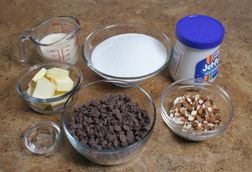
Dry Ingredients | Solid Ingredients | Liquid Ingredients | Fat Ingredients
There are many ingredients that have special functions in the baking and cooking process. Some functions are critical to the success of the finished product.
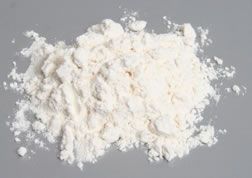
Most types of flour keep well in a sealed container in a cool, dry, and dark location. The original paper packaging used for many types of flour is fine for long term storage as long as the package has not been opened.
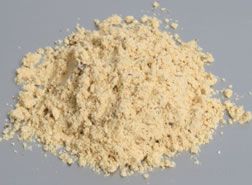
Types of Non-Wheat Flour Ground from Legumes
Garbanzo Bean Flour
Garbanzo bean flour is a variety of flour that is most often used in East Indian and Middle Eastern cooking.
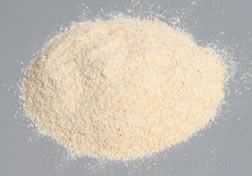
Types of Non-Wheat Flour Ground from Seeds
There are many types of flour milled from a wide variety of seeds. Most of the seeds used for flour are also prepared and cooked similar to actual cereal grains, so many people make no distinction between grain-like seeds and actual grains because of the similar ways in which they are used.
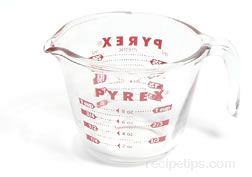
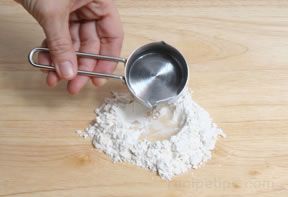
Individual graduated dry measuring cups are used to measure large quantities of flour while measuring spoons can be used to measure the smallest quantities.
When measuring flour, it is best to fill the measuring device until the flour is heaping above the rim.
Commercial Flour Milling
The wheat flour milling process begins after the wheat is harvested and is delivered to local elevators where it is graded and sold. The wheat is then delivered to the flourmill, where the first step is to remove the dirt and impurities.
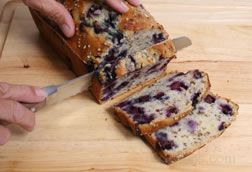
Homemade Blueberry Nut Bread is easy to prepare and tastes great. Blueberry Nut Bread serves as either a breakfast bread or dessert bread. Follow these simple instructions to create a bread that your family will love.
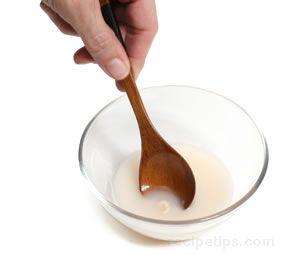
Bread Making Demonstration:Bread Using a Starter
Ciabatta
Ciabatta is typically identified by its shape, which is that of a worn or flattened slipper, and thus the meaning of the word "ciabatta" in Italian.
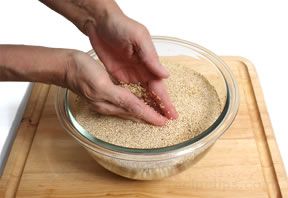
Grinding or milling various types of flour in the home can be accomplished with only a few basic tools. Some tools make the job easier and some types of flour are easier to create depending on the type of grain or other substance that is used.
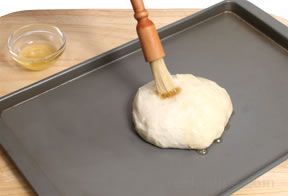
Glazing and/or topping are often the final steps in bread making prior to baking the bread. Although glazes and toppings are often optional ingredients, they do add a boost of flavor and enhance the appearance of the bread.
Standard Loaf Pan | Bloomer | Cob or Boule | Coburg | CottageMolded Tin or Split Pan | Baguette | Épi | Fougasse | Braided | Ring | Flat Breads
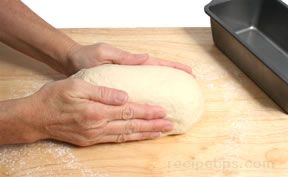
After the dough has been punched down, kneaded, and then has rested briefly, it is ready to be shaped.
Sourdough Starter | Sponge Starter | Old Dough Method
The primary difference between making bread with a starter and making bread with the direct or straight yeast method is that starter breads require much more time to prepare, but the flavor and texture of the bread is almost impossible to achieve with other leavening methods.
Leavening Agents | Liquids | SaltsFats and Oils | Sweeteners | Other Flavoring Ingredients
Leavening Agents
Leavening agents are the substances that allow bread dough to rise.
Types of Non-Wheat Flour Ground from Tubers
Arrowroot
The fleshy round tubers of the arrowroot plant produce an edible starch after processing, which is then ground into a fine powder.
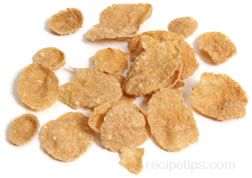
Described below are some of the products (including flour) created directly from various grains. Other than a few exceptions, products that are created after the grain has been ground into flour are not described, because they are so numerous.
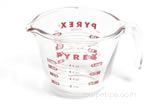
Measuring | Mixing, Rising, and KneadingAdditional Tools for Preparation | Baking | Serving
Most of the kitchen tools and devices necessary for bread making are simple items that are found in most home kitchens: measuring cups and spoons, a large bowl (preferably glass), a large spoon (preferably wood), a work surface, a dish towel, a sharp knife, and a baking sheet.
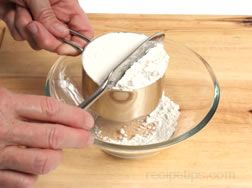
Measuring Dry Ingredients | Weight Versus VolumeMeasuring Solid Fats | Measuring Liquid Ingredients
When making bread, it is critical to use precise measurements. Unlike general cooking in which precise measurements are often not as critical, inaccurate measurements in bread making (and most baked items) affect the chemical processes that occur during the preparation and baking.
Top 87 articles found
Displaying 21-40 | << Prev 20 | Next 20 >>


Advertisement
Advertisement