
Loading
Search
We hope you found what you are searching for. If not, contact us and let us know what your want. We will do the work for you and get back to you when we're done.
beef cooking guide - Knowledge Search
Top 96 articles found
Displaying 21-40 | << Prev 20 | Next 20 >>

Like braising and stewing, steaming is a moist heat cooking method that results in tender and flavorful beef through the use of steam. Unlike braising and stewing, the meat is not actually placed in water, but is suspended above it.
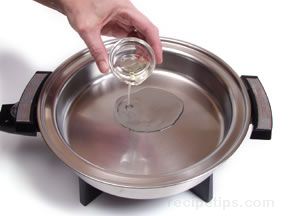
Braising is a process of slow cooking tougher cuts of meat in liquid in order to add flavor and to moisten and tenderize the meat. This technique is also known as pot-roasting.
People often use the terms barbecuing and grilling interchangeably, but they are two completely different cooking processes. While grilling refers to food that is cooked directly over high heat, barbecuing refers to foods that are cooked with a long, slow process using indirect, low-heat generated by smoldering logs or wood chips that smoke-cook the food.
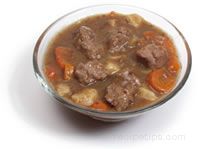
Stewing is a moist heat cooking process much like braising except that the meat is totally immersed in liquid rather than being only partially immersed as it is with braising.
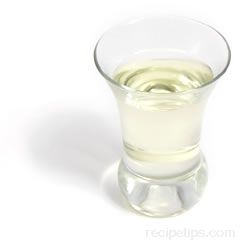
Deep-frying, also known as deep-fat frying, is a process of immersing food in a deep pot containing heated oil, which cooks the food quickly, producing a crispy surface over a tender and moist interior.
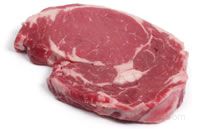
Oven-Broiling | Pan-Broiling
Broiling is much like grilling in that food is cooked directly with high heat. The difference between broiling and grilling is that broiling is usually done in an oven and the heat source is above the food (except when pan-broiling) whereas grilling is done on equipment that is generally used outdoors and the heat source is below the food.
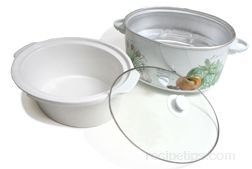
crock pot, slow cooking
The stir-frying process requires high heat and the tossing and stirring of ingredients in a large pan to ensure quick and even cooking. A wok is the traditional type of pan to use for stir-frying because it has deep tapered sides which allows food to be stirred and tossed easily.
Pan-frying is similar to sautéing except that a little more oil is used, the cuts of beef do not have to be thin, and the cooking process may require more time. Like sautéing, high heat is used to sear the meat, creating a flavorful browned crust.
crock pot, slow cooking
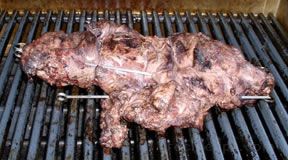
Dry Heat Cooking | Moist Heat Cooking
There are two general methods used for cooking lamb (and most other meats):Dry Heat Cooking and Moist Heat Cooking.
Dry Heat Cooking
When cooking lamb using dry heat cooking, the meat is in direct contact with a hot surface or close to the heat source.
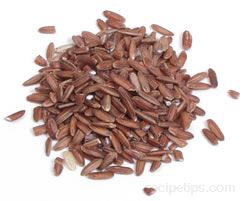
Cooking Rice with the Absorption Method | Cooking Paella | Cooking Risotto
Cooking Rice with the Absorption Method
Cooking rice with the absorption method is, perhaps, the method that most people are accustomed to when cooking rice, but it is often the most difficult.
Sautéing | Pan-Frying | Stir-Frying | Deep-Frying | Grilling and BroilingBaking with Olive Oil | Smoke Point | Cooking Guidelines
Sautéing
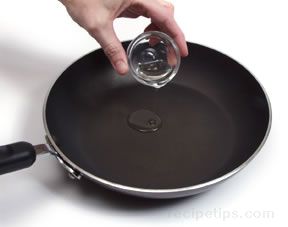
Sautéing is a cooking process using high heat that browns and sears food quickly in a small quantity of oil or fat in a skillet.
Hot Liquid Cooking Techniques for Grain | Cooking Rye
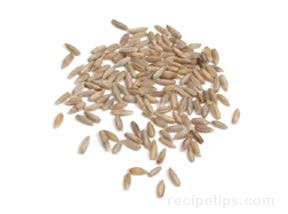
The three basic techniques for cooking rye with hot liquid are boiling, absorption, and steaming, which are perhaps the most popular methods for cooking most whole grains.
Hot Liquid Cooking Techniques for Grain | Cooking Quinoa
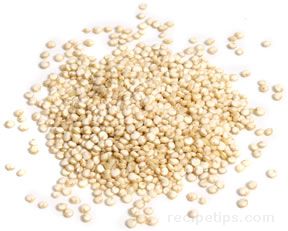
The three basic techniques for cooking quinoa with hot liquid are boiling, absorption, and steaming, which are perhaps the most popular methods for cooking most whole grains.
Hot Liquid Cooking Techniques for Grain | Cooking Millet
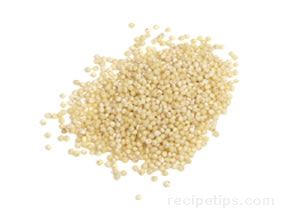
The three basic techniques for cooking millet with hot liquid are boiling, absorption, and steaming, which are perhaps the most popular methods for cooking most whole grains.
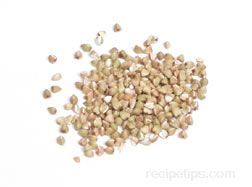
Hot Liquid Cooking Techniques for Grain | Cooking Buckwheat
The three basic techniques for cooking buckwheat with hot liquid are boiling, absorption, and steaming, which are perhaps the most popular methods for cooking most whole grains.
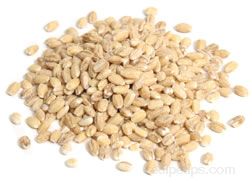
Hot Liquid Cooking Techniques for Grain | Cooking Barley
The three basic techniques for cooking barley with hot liquid are boiling, absorption, and steaming, which are perhaps the most popular methods for cooking most whole grains.
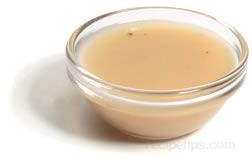
Flour Used as a Thickening Agent | Frying | Deep-Frying | Baking
Flour Used as a Thickening Agent
Flour is one of the most often used thickening agents when cooking foods such as sauces, gravies, soups, stews, and gumbos.
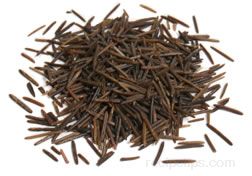
Hot Liquid Cooking Techniques for Grain | Cooking Wild Rice
The three basic techniques for cooking wild rice with hot liquid are boiling, absorption, and steaming, which are perhaps the most popular methods for cooking most whole grains.
Top 96 articles found
Displaying 21-40 | << Prev 20 | Next 20 >>


Advertisement
Advertisement