
Loading
Search
We hope you found what you are searching for. If not, contact us and let us know what your want. We will do the work for you and get back to you when we're done.
bread preparation guide - Knowledge Search
Top 41 articles found
Displaying 1-20 | Next 20 >>
Measuring | Mixing, Rising, and KneadingAdditional Tools for Preparation | Baking | Serving
Most of the kitchen tools and devices necessary for bread making are simple items that are found in most home kitchens: measuring cups and spoons, a large bowl (preferably glass), a large spoon (preferably wood), a work surface, a dish towel, a sharp knife, and a baking sheet.
Standard Loaf Pan | Bloomer | Cob or Boule | Coburg | CottageMolded Tin or Split Pan | Baguette | Épi | Fougasse | Braided | Ring | Flat Breads
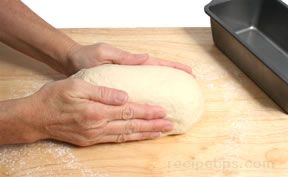
After the dough has been punched down, kneaded, and then has rested briefly, it is ready to be shaped.
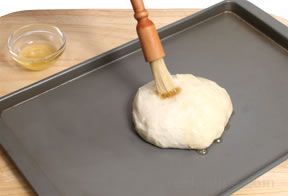
Glazing and/or topping are often the final steps in bread making prior to baking the bread. Although glazes and toppings are often optional ingredients, they do add a boost of flavor and enhance the appearance of the bread.
Sourdough Starter | Sponge Starter | Old Dough Method
The primary difference between making bread with a starter and making bread with the direct or straight yeast method is that starter breads require much more time to prepare, but the flavor and texture of the bread is almost impossible to achieve with other leavening methods.
Risen breads rely on a means of producing carbon dioxide gas that becomes trapped in the batter or dough causing the dough to rise. The carbon dioxide gas is produced either as a byproduct of fermentation or through the use of chemical agents.
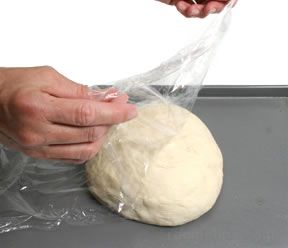
For many bread recipes the final rising is often the second rising, while other breads may require two or more cycles of rising, punching, and kneading before being shaped and allowed to rise for the final time.
Chemical leavening agents allow bread dough to be prepared in minutes instead of hours. Chemical leavens, such as baking soda and baking powder, react immediately when combined with a liquid so they are mixed with the other dry ingredients before any liquid ingredients are added.
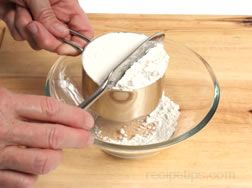
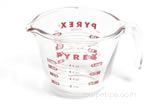
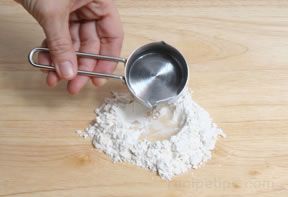
Measuring Dry Ingredients | Weight Versus VolumeMeasuring Solid Fats | Measuring Liquid Ingredients
When making bread, it is critical to use precise measurements. Unlike general cooking in which precise measurements are often not as critical, inaccurate measurements in bread making (and most baked items) affect the chemical processes that occur during the preparation and baking.
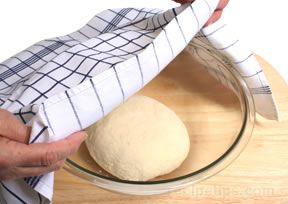
After the bread dough has been kneaded, it must be allowed to rest in order for the yeast to continue with the fermentation. The fermentation produces carbon dioxide gas, which becomes trapped within the dough, resulting in the rising action that is necessary to develop the texture and flavor of the final product.
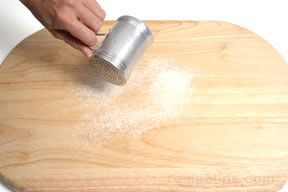
Kneading is especially important when preparing yeast breads because it helps to distribute the activated yeast and it enables the protein in the flour to develop into gluten, which promotes the properties of stretching and expansion in the dough.
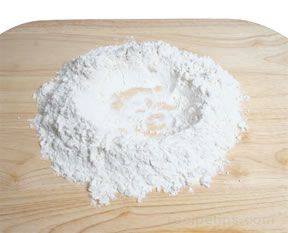
Hand Mixing on a Flat Surface | Hand Mixing in a Bowl
Hand Mixing on a Flat Surface (Well Method)
A traditional method for dough preparation is to combine the dry and liquid ingredients directly on a clean, smooth work surface.
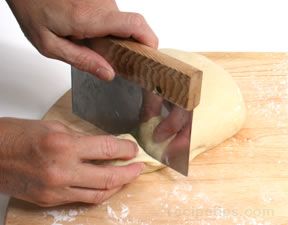
Rounded Rolls | Crescent Rolls | Fan Tan Rolls | Knot Shaped RollsTwisted Rolls | Breadsticks | Parker House Rolls | Clover Leaf Rolls | Bagels
Many rolls and buns are smaller versions of larger bread loaves.
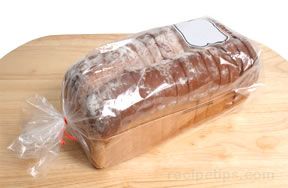
Among the top criteria influencing the shelf life of bread are the following: the bread ingredients used, the bread storage temperature and humidity levels, the type of storage container used, and the bread storage location.
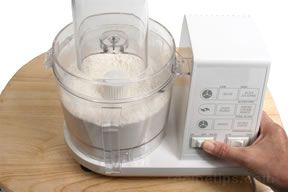
Food Processor | Heavy-Duty Mixer
Mixing and Kneading with a Food Processor
A food processor can be used for mixing ingredients and kneading the dough for yeast breads. It combines the ingredients quickly and easily, but is limited as to the quantity of dough that can be produced at one time.
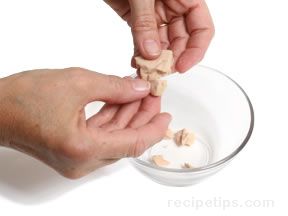
Fresh Cake Yeast | Active Dry Yeast | Quick-Rising Active Dry Yeast
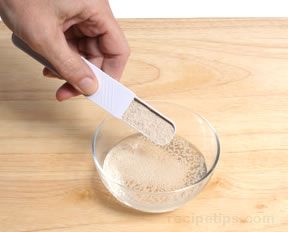
Yeast that is activated in warm water before it is mixed with the flour and other ingredients to form dough, is the simplest leavening method for preparing yeasted breads.
Thawing Fish | Salmon Preparation | Tips
Thawing Fish
Frozen fish can be cooked without thawing but the cooking time would need to be increased to cook it thoroughly. If the fish is going to be breaded, stuffed, broiled, fried or cooked in the microwave, it should be thawed completely first.
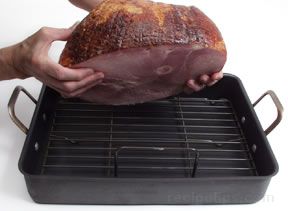
Some tasks to be aware of when preparing and baking a ham: thawing the ham properly, keeping a clean working area, and preparation for the cooking method being used. Most hams are prepared in the same basic manner for many of the ham recipes you will use.
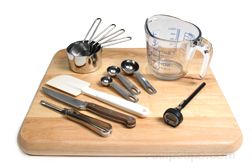
crock pot, slow cooking
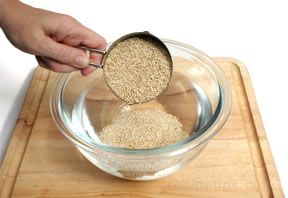
Cleaning/Rinsing Grain | Soaking Grain | Toasting Grain
Preparation of whole grains before cooking is fairly simple: most require only washing or soaking before they can be cooked.
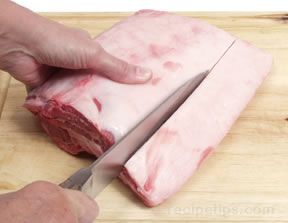
Thawing | Preparing a Rack of Lamb | Preparing a Crown RoastPreparing a Guard of Honor | Boning and Butterflying a Leg of Lamb | Grinding
Thawing
Lamb that has been frozen should never be defrosted at room temperature because harmful bacteria may grow rapidly under such conditions.
Top 41 articles found
Displaying 1-20 | Next 20 >>


Advertisement
Advertisement