
Loading
Search
We hope you found what you are searching for. If not, contact us and let us know what your want. We will do the work for you and get back to you when we're done.
salt free - Glossary Search
Top 19 glossary terms found
Displaying 1-19
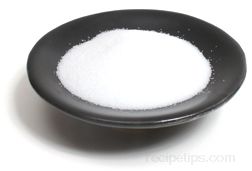
A term used to describe a food product that does not have any salt added to it. Products without salt may also be referred to as unsalted.
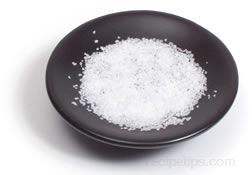
A coarse grained salt that has been prepared according to Jewish laws and procedures, thus keeping it "kosher." Free of additives combined with the salt particles, the grains have been compressed, creating a flatter, yet coarsed grain with a lighter weight that sticks better to food and dissolves easily.
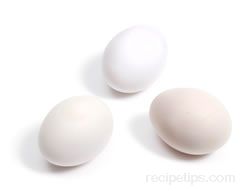
Free-range is the name given to eggs produced by hens that have been raised outdoors, however, because of climate, most hens are not raised entirely in the open.

Any food product, such as fat free cheese or fat free milk that contains no fat solids. Also referred to as "nonfat".
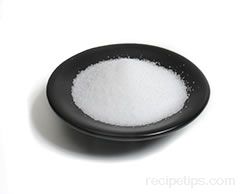
A refined, fine-grained salt containing additives, which make it flow freely. It does not stick to food very well and when added to solutions it is slow at dissolving.
Juice that flows from crushed grapes before the process of pressing. Free-run juice is thought to be of a higher quality than pressed juice as it is lower in tannins.
Similar to free range chickens, this is a turkey that is not confined and is allowed to roam and feed on naturally grown feeds, consuming only a vegetarian diet.
A term that refers to products that contain no gluten, which is found in many foods, but is most notable as the substance that gives dough its elasticity, strength, and makes the dough rise.
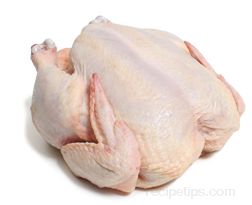
A chicken that is allowed to roam without being confined and feeds on naturally grown crops, consuming only a vegetarian diet.
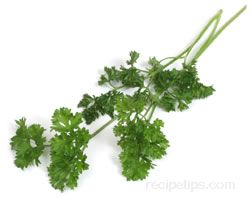
The substances added to other foods to enhance their flavor and smell, such as salt, pepper, herbs, spices, oils, and vinegars to name a few.
A type of ham that is Spanish in origin and produced exclusively from rare Iberian pigs, which are descendents of the wild boar and are the last European free-range pig breed.
The process of lowering the temperature of a liquid or solid to its freezing point. At this point the item becomes solid.
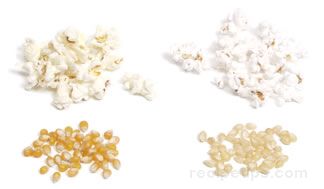
A special variety of dried corn that contains a high moisture content. About 14% of the composition of the kernel is water, which creates steam when the kernel is heated.
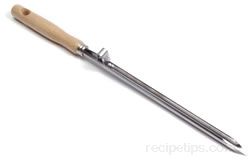
A kitchen utensil that is used to inject lard into meats in order to moisten the meat and enhance the flavor.
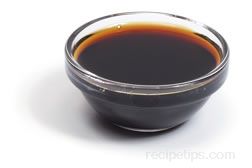
A salty brown Asian sauce used as a seasoning or condiment to enhance and harmonize the flavors of various foods.
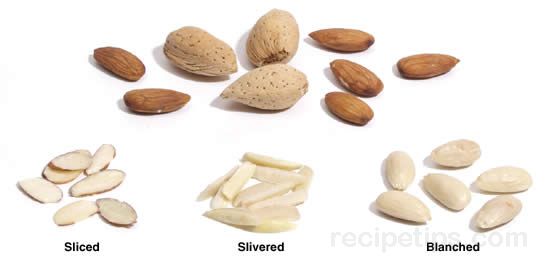
An edible dry fruit or seed covered with a hard shell that protects the kernel or meat inside. Generally, the shell is removed and discarded and only the kernel, known as the nut, inside is the item to be eaten.
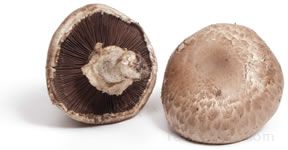
The mushroom is just one of a very large, diverse group of organisms called fungi. It is similar to a plant but lacks chlorophyll, so it cannot produce its own food through photosynthesis.
The process of injecting fat into the interior of meat, generally by using a larding instrument to accomplish the task.
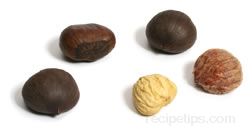
A nut harvested from the branches of the Chestnut tree, a member of the beech family of plants. A prickly outer casing is removed to expose a dark brown, glossy shell that covers a sweet, but mealy fleshed nut.
Top 19 glossary terms found
Displaying 1-19


Advertisement
Advertisement