
Loading
Search
We hope you found what you are searching for. If not, contact us and let us know what your want. We will do the work for you and get back to you when we're done.
preserving lemons - Glossary Search
Top 25 glossary terms found
Displaying 1-20 | Next 5 >>

Preserved lemons are used by many chefs today because of their distinct flavor and smooth texture. The lemons are preserved in a mixture of salt and lemon juice for approximately 25 to 30 days.
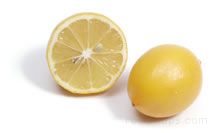
A type of lemon that does not have the exceptionally tart flavor of standard lemons. Meyer lemons are typically considered to be sweeter in both flavor and aroma, providing a taste mildly similar to a tangerine.
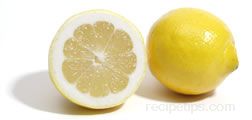
An oval shaped, bright yellow citrus fruit that is sought for its tart flavored, highly acidic juice and skin.

A popular quick bread in Britain and the United States that is usually flavored with lemon zest or lemon extract to provide a distinct lemon flavor.

The juice from a fresh lemon, which is the best form of lemon flavor. Bottled lemon juice can be substituted if fresh lemons are not available.
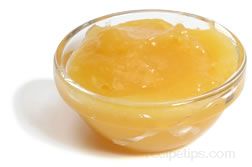
A mixture made with sugar, water, egg yolks, butter, cream from milk, lemon flavored concentrate, natural lemon flavors, and pectin that is thickened by slowly cooking the ingredients in a double boiler.
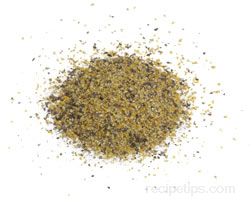
A seasoning that contains pepper, lemon peel granules, salt, sugar and other spices. It gives lemon and pepper flavoring to the food on which it is applied.

A reed-like grass with a scallion-type base that is used as a flavoring in food dishes, providing a sharp lemony taste.
A golden colored oil with a citrus aroma that is produced from the skin of the lemon. As edible oil, it is commonly used as a dressing for salad oils or as a food ingredient.
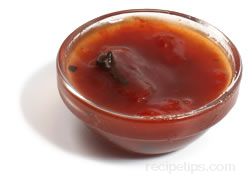
A sweetened tomato sauce, very similar to a jelly, that is served as a condiment for bread and other foods.
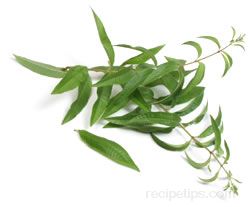
An herb that has a lemony aroma and flavor, used to flavor tea and desserts and can also be used to season meat and fish dishes.
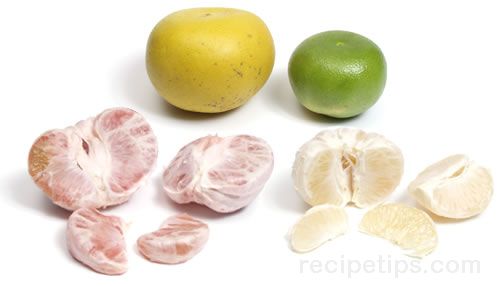
A type of fruit that may grow as large as a foot in diameter and is the largest citrus fruit. It is closely related to the grapefruit, but it is a bit less juicy, less bitter, and is sweeter.

A device used to extract the juices form citrus fruit, such as lemons and oranges. The fruit is cut in half and the reamer is pressed into the fruit and twisted back and forth.
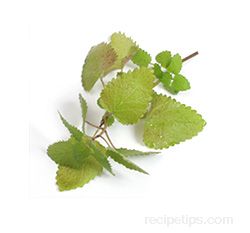
A minty green herb with a citrus aroma, which is used to add flavor to tea, vegetables, fruits, custards, seafood, fish, poultry, pasta, and rice.
Originating in Austria, it is a sweet dessert baked into a 10 to 12 inch diameter tart. A Linzertorte consists of a pastry crust typically made with flour, butter, hazelnuts, almonds, lemon zest, and a variety of seasonings.

To make sour or somewhat acidic. Foods are made sour to enhance the flavor or a solution is made acidic to preserve foods.
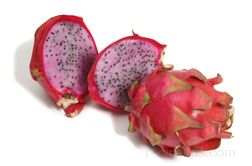
Pinkish-red or yellow in color, this type of fruit is harvested from a species of climbing cactus that grows in tropical areas of the Middle East, Asia, Central and South America and a few other regions with warm climates.

A meat topping that is spread over a Ham prior to baking in order to enhance the flavor of the meat after it has finished baking and to help keep the Ham moist and tender in texture.
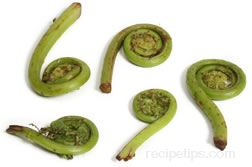
A small fern plant which sprouts a shoot at the tip of the plant, referred to as a "frond" or a "crosier," that is harvested to be served as a vegetable.
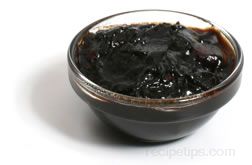
A cooking ingredient, made from the tropical tamarind fruit, originating in North Africa and Asia, which is used as a seasoning for meat, chutney, curry dishes and pickled fish.
Top 25 glossary terms found
Displaying 1-20 | Next 5 >>


Advertisement
Advertisement