
Loading
Search
We hope you found what you are searching for. If not, contact us and let us know what your want. We will do the work for you and get back to you when we're done.
food additive - Glossary Search
Top 35 glossary terms found
Displaying 1-20 | Next 15 >>
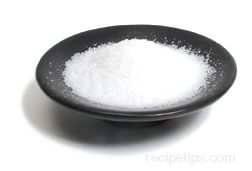
A substance that is combined with food in order to improve food for a variety of needs. Food Additives are commonly introduced into the food in order to enhance the appearance or taste, to preserve or retain the freshness, to keep the product safe for consumption, to improve the nutritional value, to improve the appearance, taste or texture, or to assist with the processing and/or preparation.
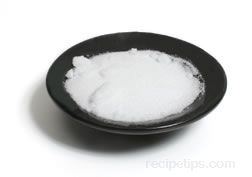
An acidic substance used as food additives that act as control agents to alter food ph levels in beverages and sweets or to serve as levening agents for breads.

A chemical or natural additive that is used to enhance or alter the color of a food being processed or prepared.
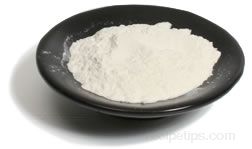
A food additive that is most often used as a thickener or stabilizer. This ingredient is produced from legume plants in arid areas of India, Pakistan and the U.S.

Any of a wide variety of foods that are produced by altering or engineering various procedures to achieve desired results.
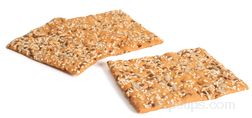
A term used to describe food that complies with the USDA (United States Department of Agriculture) standards for natural processing, handling, and labeling.
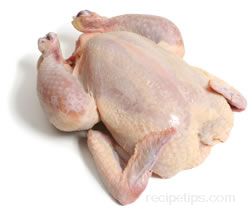
Any of the variety of food products grown or containing ingredients that have been produced without the use of antibiotics, chemicals, fertilizers, and pesticides.
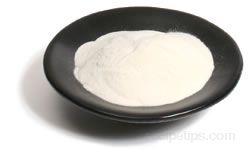
An ingredient added to various food products, such as ice cream, snack bars, sour cream, yogurt, or salad dressing as a thickening, stabilizing and emulsifying agent.
A sugar alcohol naturally present in foods such as fruits and fermented foods. As part of a group of sugar alcohols that include fructose, glucose and sucrose, erythritol is a sweetener that is produced from glucose through a natural fermentation process.
A process that bathes food with low level gamma rays (x-rays) or electron beams (e-beam) to reduce or kill microorganisms, such as e-coli, listeria, salmonella and campylobacter that may cause illnesses from exposure to harmful pathogens.
A process that bathes food with low level gamma rays (x-rays) or an electron beam (e-beam) to reduce or kill microorganisms, such as e-coli, listeria, salmonella and campylobacter that may cause illnesses from exposure to harmful pathogens.
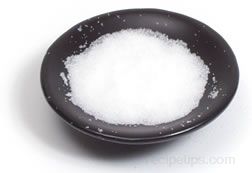
A method to preserve fruits, vegetables and meat in a vinegar or brine mixture that is then heat processed in boiling water so the pickled food can be stored for longer lengths of time.

An organic compound that is found naturally in various foods and plants such as cocoa beans (coffee and chocolate or chocolate milk products), tea leaves (teas), and kola nuts.
A fine-grained salt that does not contain iodine or other additives, that is used in the process to pickle meats and can foods.
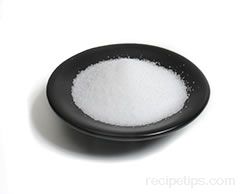
A refined, fine-grained salt containing additives, which make it flow freely. It does not stick to food very well and when added to solutions it is slow at dissolving.
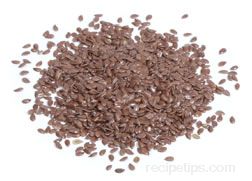
A plant native to Europe and Asia that is grown for its fiber or its seeds. Similar to several other plants that are not actually considered grains (amaranth and buckwheat, for example), Flax is often used like one.
Similar to other kosher foods, making a wine kosher involves processes and procedures that follow specific guidelines and laws established by the Jewish community.
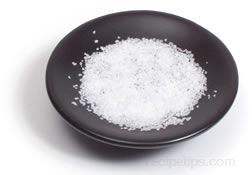
A coarse grained salt that has been prepared according to Jewish laws and procedures, thus keeping it "kosher." Free of additives combined with the salt particles, the grains have been compressed, creating a flatter, yet coarsed grain with a lighter weight that sticks better to food and dissolves easily.
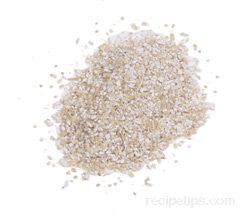
The nutrient packed layers covering the inner kernel of most grains. Bran is loaded with insoluble fiber, which is important for digestive health, and soluble fiber, which helps to lower the cholesterol level in the blood.
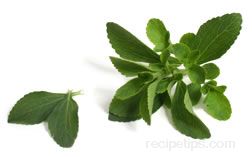
Native to South America, this herb grows into a shrub, producing a natural sweetener obtained from the leaves.
Top 35 glossary terms found
Displaying 1-20 | Next 15 >>


Advertisement
Advertisement