
Loading
Search
We hope you found what you are searching for. If not, contact us and let us know what your want. We will do the work for you and get back to you when we're done.
flour types - Glossary Search
Top 181 glossary terms found
Displaying 1-20 | Next 20 >>
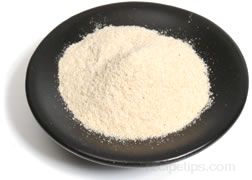
1. A product created by grinding and sifting various types of substances, such as grains, legumes, nuts, and some vegetables into a powdered form that varies from very soft to coarse in texture.

A type of flour made from the Yuca root, also known as Cassava root. Another type of flour made from the Yuca root is referred to as Manioc flour, a coarse ground meal made from the grated flesh of the root.
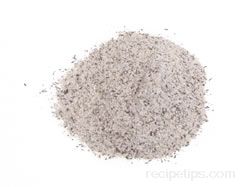
Flour that does not contain gluten, which is a protein found in some types of flour milled from various grains, seeds, legumes, tubers, and nuts.
Flour that is ground from substances other than wheat. Non-wheat flours are ground from seeds, roots and tubers, nuts, legumes and other grains.
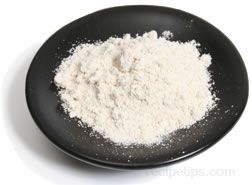
A type of flour made from barley grain. The flour is usually produced from “pearled” barley, which refers to barley that has been scoured and polished to remove the husk and the bran.
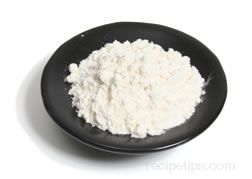
A type of flour, produced from hard wheat that has been treated to remove the starch. It contains a greater percentage of gluten (at least 70% pure) than other types of flour and a lower percentage of starch.
A type of flour milled from seeds obtained from the amaranth plant. The small, lens shaped seed or grain is light tan in color and provides a very mild tangy, somewhat peppery or nutty flavor, which may be quite noticeable if the flour is not combined with another flour when preparing baked foods.
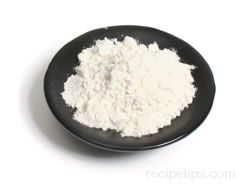
A type of flour that was developed specifically for bread making. Bread flour is unbleached, high-gluten flour that typically contains 99.9 % hard wheat flour with malted barley added to increase the yeast activity.
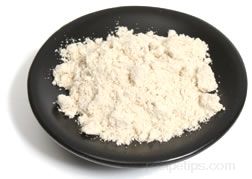
A type of flour milled from sorghum grain. Sorghum flour lacks gluten, so it isn’t suitable for making yeast breads.
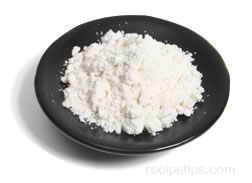
A type of wheat flour in which the leavening agent has already been added. The leavening agent is generally in the form of baking powder.
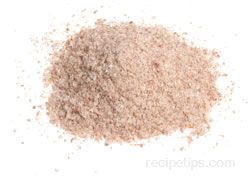
A type of flour made from rice kernels that have been processed to remove the outer hulls, but not the nutritious bran layers covering the kernel.
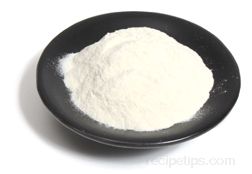
A type of flour produced from cooked, dried, and ground potatoes. It is used as an ingredient in potato based recipes to enhance the potato flavor and is often mixed with other types of flour for baking breads and rolls.
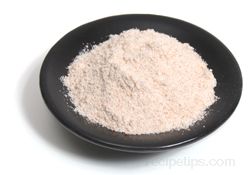
A type of whole-wheat flour that is slightly coarser than regular flour. The Rev. Sylvester Graham, an early advocate of healthier foods, developed the flour.
A type of flour that dissolves easily in liquids regardless of the temperature of the liquid. The flour dissolves as easily in cold liquid as it does in hot.
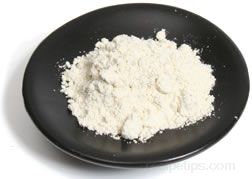
A type of flour produced from grinding quinoa seeds into a powder. Quinoa flour is rich in protein and nutrients, especially amino acids.
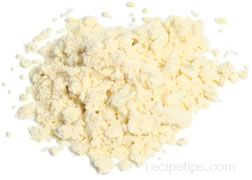
A type of flour milled from dried kernels of yellow corn. It is similar to cornmeal except that it is ground to a finer consistency than cornmeal.
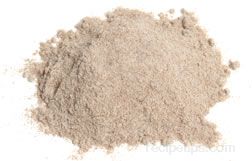
A type of flour milled from teff grain. Teff flour is high in calcium, iron, magnesium, zinc, and thiamin and it is a good source of fiber.
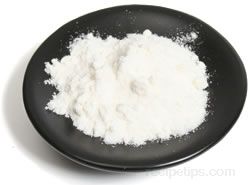
A type of flour produced from grinding polished rice (the bran and germ have been removed) into a powder.
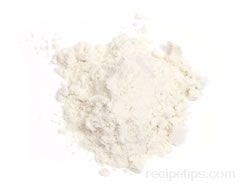
A type of flour ground from millet seeds. Since it is gluten free, millet flour must be combined with high-gluten flour when used in leavened breads.
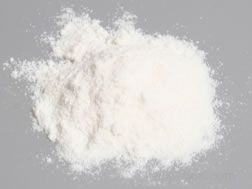
A type of flour milled from mochi rice, which is a short-grained, glutinous rice common in Asia. It is often used to thicken sauces and food mixes, providing a strong bonding that can withstand refrigerator and freezer temperatures without separating.
Top 181 glossary terms found
Displaying 1-20 | Next 20 >>


Advertisement
Advertisement