
Loading
Search
We hope you found what you are searching for. If not, contact us and let us know what your want. We will do the work for you and get back to you when we're done.
danish blue cheese - Glossary Search
Top 27 glossary terms found
Displaying 1-20 | Next 7 >>
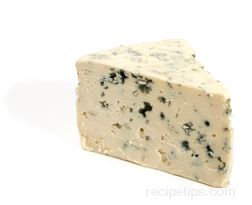
Any of a variety of cheeses that are made in Denmark using their traditional manner of cheesemaking for blue cheeses that are formulated to be similar to the pasteurized Bleu d'Auvergne and unpasteurized Bleu des Causses varieties of this cheese.
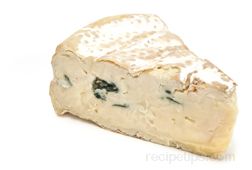
A Danish brie cheese that is classified as blue cheese. Made as a double cream cheese from cow's milk, Saga Bleu Cheese contains a delicate blue mold that may not appear typical of other varieties of blue cheese.
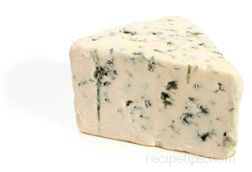
Originating in Sweden, this variety of blue cheese is produced much like the well known Bleu d'Augverne cheese.
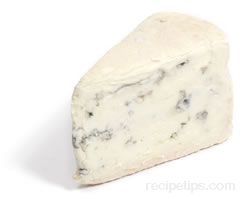
A very soft, blue-veined Danish cheese with a buttery flavor. This blue cheese has a spreadable quality making it excellent for appetizers or as a snacking cheese it goes well with fruit and nuts.
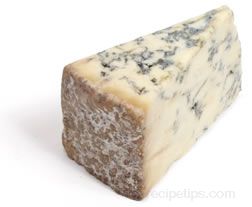
An English blue cheese, which is made from the whole milk of cows and aged from several months to five months and longer.
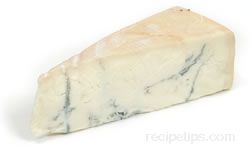
A cow's milk blue cheese from Italy that is a milder version of the traditional (naturale)aged Gorgonzola Blue.
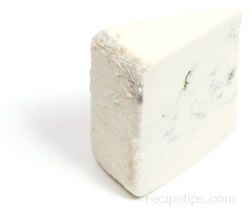
A variety of blue cheese that comes from the state of Iowa in the U.S. It is a traditional farmhouse cheese made from unpasteurized cow's milk.
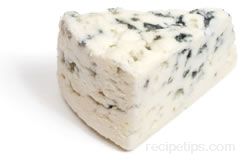
A French blue cheese, made from sheep's milk, which has a distinctively sweet, but tart to salty flavor with a semisoft, crumbly texture.
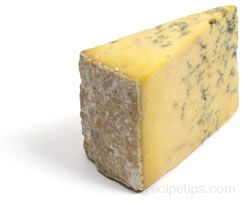
A cheese originally from Scotland, made from cow's milk, which combines a base of creamy but firm texture with the typical blue cheese veins.
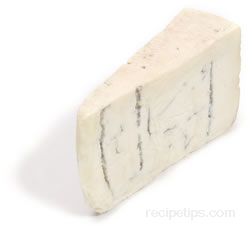
A creamy, pale yellow cheese with streaks of blue veining, made from cow's milk. It is an Italian blue cheese named for the town in Italy where it originated.

A soft blue cheese native to Greece. It is made from full fat sheep's milk and has salt and ground pepper added to it before it is aged, giving it a strong flavor.
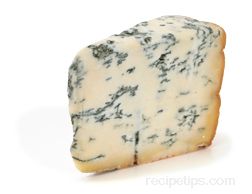
The aged variety of blue cheese made from cow's milk. Native to Italy, Gorgonzola is available as either a milder version known as "dolce" or the naturale version, which is the aged variety of Gorgonzola Blue.
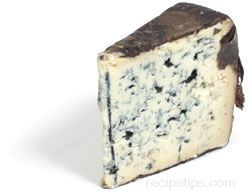
A popular variety of farmhouse blue cheese produced in and around the town of Cabrales in Northwest Spain.
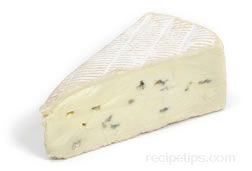
A cheese native to Germany and Austria that is produced as a combination of a Camembert and a Gorgonzola, thus the name, which is also often spelled Cambazola.
A type of aged cheese that features veins of edible blue and/or green mold throughout the cheese. The molds produce the characteristic sharp and tangy flavor of the cheese that has a texture ranging from creamy to crumbly.
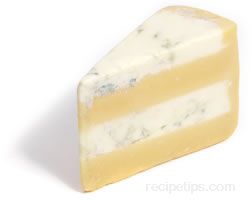
A combination of double Gloucester cheese layered and alternating with layers of Stilton blue cheese.
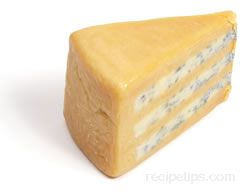
A combination of double Gloucester cheddar cheese and alternating inner layers of Stilton blue cheese.
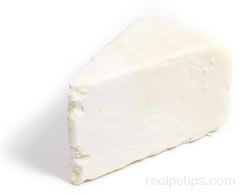
Developed in the Leicestershire region of England, white Stilton cheese is a younger version of the famous Stilton blue cheese, but without the blue mold veining.
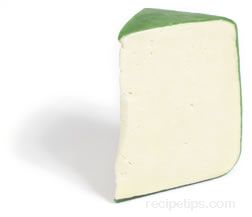
A cheese originating in the Cheshire area of England, which was traditionally a blue mold cheese. Although the blue mold variety is still made, the cheese is most often produced as a white cheese that is crumbly in texture and mildly flavored, often considered comparable to a white cheddar.
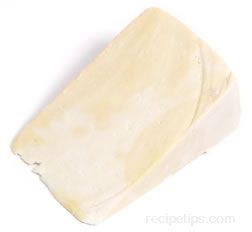
An English cheese dating back to the 12th century making it one of the oldest English cheeses produced.
Top 27 glossary terms found
Displaying 1-20 | Next 7 >>


Advertisement
Advertisement