
Loading
Search
We hope you found what you are searching for. If not, contact us and let us know what your want. We will do the work for you and get back to you when we're done.
cooking temperature and time - Glossary Search
Top 61 glossary terms found
Displaying 1-20 | Next 20 >>
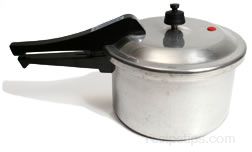
A cooking utensil that creates pressurized steam to cook foods. A traditional pressure cooker consists of a steel pot with an aluminum base, a locking lid containing an airtight seal, and a removable safety valve (on older models) that attaches to the lid or a built-in value with easy to read pressure markings (newer models).
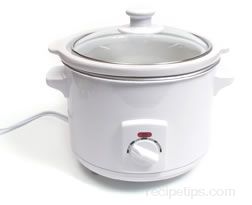
A small electric appliance that slowly cooks food with a low, moist heat. This piece of cookware allows food to be prepared at a consistent low temperature and is designed to cook for a period of six to twelve hours.

Setting an oven or broiler to the desired cooking temperature in advance of using it so that is has time to reach the desired temperature before putting the food in to be cooked.
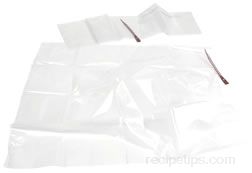
A cooking bag manufactured with heat tempered plastic enabling it to withstand the high temperatures of an oven.
The process of letting meat rest after cooking. Since meat continues to cook when removed from any heat source such as an oven, it has become referred to as Carryover Cooking or giving food a rest, a time during which the temperature of the meat increases 5 to 15ºF.
A controlled method of cooking foods by heating the air within a lidded pot to a very high temperature (above the boiling point), allowing air pressure and steam to build inside and cook foods faster at higher temperatures.
The process that occurs as food continues to cook despite being removed from the oven, the stovetop, the grill, or a roasting fire.
A ham that had not reached an internal temperature exceeding 137° F during processing. Uncooked hams are generally dry-cured hams, although dry-cured hams are also available fully cooked.
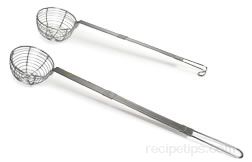
The process of "dry" cooking food totally covered in hot cooking fat or oil. This process produces evenly cooked food with a golden, crisp surface on the outside.
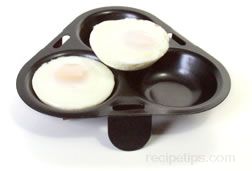
An egg cooked in water that is heated to a temperature slightly below the boiling point. There are several methods to poach eggs.
The process of lowering the temperature of a food that was just cooked to a temperature 40 degrees F (4.4 degrees C) or less in a short period of time.
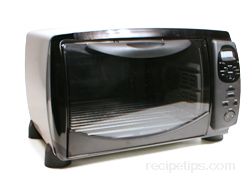
A type of oven that uses convection currents to cook food. Fans are used to distribute hot air around the oven, which helps to cook the food more evenly and quickly than in a conventional oven that most often contains two heating elements, one at the bottom that bakes foods and one at the top that broils.
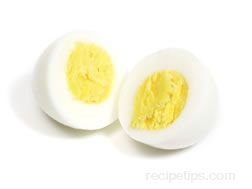
A type of egg that is cooked in the shell until the yolk and the white are completely solid. In order to accomplish this use fresh eggs that are warmed to room temperature.
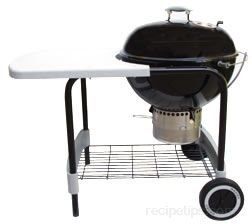
1. A cooking device consisting of a metal grate or rack placed above hot coals heated by gas or charcoal briquettes.
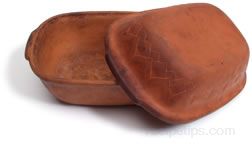
A type of pot that is commonly used to cook a variety of sauces, stews, egg, potato, vegetable, meat, poultry, and fish dishes.
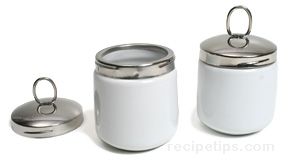
A cooking utensil that is made to hold an egg so it can be soft cooked, preparing by using a method that is referred to as "coddling" eggs.
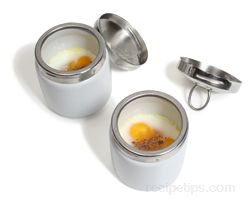
A method of cooking an egg in which the egg is cooked more slowly than a boiled egg, but basically yields the same results, except that the egg is more tender.
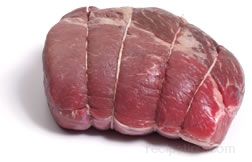
1. A method of cooking food, such as meat, poultry, and fish, in an open pan and using dry heat (usually in an oven) to cook the food.
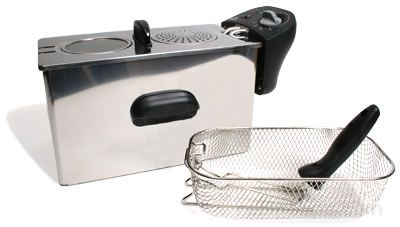
A type of kitchen utensil that can be used to heat cooking oils (fats) so foods can be completely covered in hot oil to be fry cooked, also referred to as "deep fat fried".
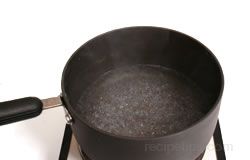
The process of heating liquid to the temperature at which it will begin to transform into a gaseous state, which is 212ºF or 100ºC when water is boiled at sea level.
Top 61 glossary terms found
Displaying 1-20 | Next 20 >>


Advertisement
Advertisement