
Loading
Search
We hope you found what you are searching for. If not, contact us and let us know what your want. We will do the work for you and get back to you when we're done.
canning salt - Glossary Search
Top 54 glossary terms found
Displaying 21-40 | << Prev 20 | Next 14 >>
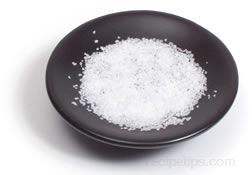
A coarse grained salt that has been prepared according to Jewish laws and procedures, thus keeping it "kosher." Free of additives combined with the salt particles, the grains have been compressed, creating a flatter, yet coarsed grain with a lighter weight that sticks better to food and dissolves easily.
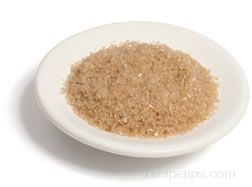
Any of several types of sea salt that have been "cured" with smoke in order to add flavor to the salt as a seasoning, similar to a smoked meat.
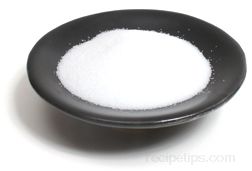
A seasoning that contains no sodium or small amounts of sodium and replaces regular salt for anyone with health concerns when flavoring foods.
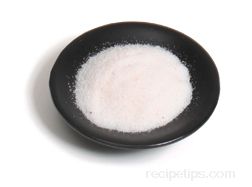
Found in regions adjacent to the Himalayan mountain range, the Himalayan Pink Salt is a natural, coarse-grained salt containing a high concentration of minerals.
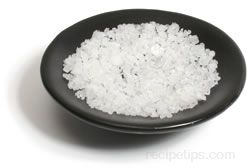
Known by its historical significance as a food preservative during earlier times, this variety of natural salt comes from the evaporation ponds surrounding the Portuguese ocean waters.
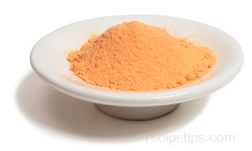
A very fine-grained salt that sticks better to popcorn and other foods such as French fries. If the surface of the popcorn has some oil present, the salt will remain on the outer skin of the corn.
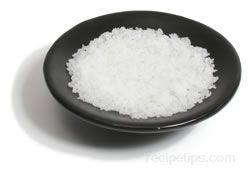
Pure white in color, this variety of salt is harvested from the waters of the Atlantic Ocean. Un-refined, air dried and processed without additives, Maine Sea Salt is produced into small, coarse particles that contain the bright flavor of the sea.
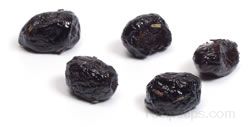
An olive that may be referred to as a dry-cured olive and is most likely a black olive. It is cured by storing it in salt for a period of one to several months, during which time the flesh of the fruit becomes wrinkled.
A term used to describe a food product that does not have any salt added to it. Products without salt may also be referred to as unsalted.
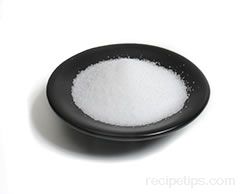
A refined, fine-grained salt containing additives, which make it flow freely. It does not stick to food very well and when added to solutions it is slow at dissolving.

Codfish that has been salted and dried for preservation. It is popular in Portugal, Spain and France.
Harvested from the pools of water remaining after the sea water has receded, this variety of salt is irregular in size and coarse in texture.
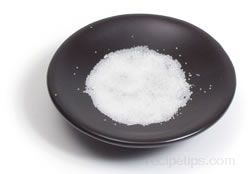
Refers to common table salt that has had iodine added to it during processing. A small amount of iodine is important for proper nutrition in helping to prevent thyroid disease.
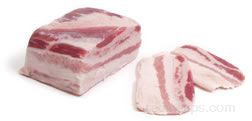
A meat product that is sometimes mistakenly referred to as "fat back". This cut of meat comes from the side and the belly of the hog and consists of a layer of fat with some lean meat streaks running through it.
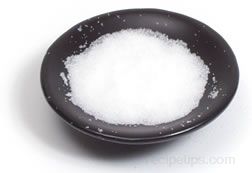
A method to preserve fruits, vegetables and meat in a vinegar or brine mixture that is then heat processed in boiling water so the pickled food can be stored for longer lengths of time.
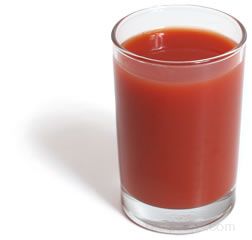
Juice extracted from fresh tomatoes by cooking them and then exposing the heated tomatoes to a process that separates the skins and seeds from the juice.
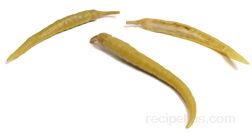
Native to the Basque region of Spain, this variety of chile pepper is small in size and narrow in dimension.
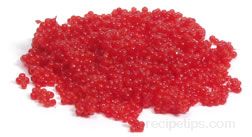
The eggs from lumpfish, which are harvested and sold as caviar. The roe is dyed and must be salted before it can be sold as caviar.
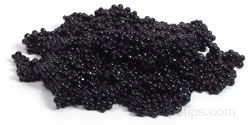
The eggs or roe of selected varieties of fish that are processed and salt cured to provide a spreadable food that is considered an elegant delicacy.
A naturally occurring, tart tasting compound formed in many fruits, such as gooseberries, lemons, limes, and pineapples.
Top 54 glossary terms found
Displaying 21-40 | << Prev 20 | Next 14 >>


Advertisement
Advertisement