
Loading
Search
We hope you found what you are searching for. If not, contact us and let us know what your want. We will do the work for you and get back to you when we're done.
oat flour - Glossary Search
Top 62 glossary terms found
Displaying 1-20 | Next 20 >>
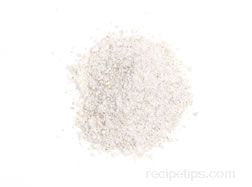
A flour ground from oat groats, which are hulled and cleaned oats. Oat flour is also ground from rolled oats or oatmeal.
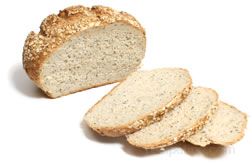
A bread flavored with oatmeal or rolled oats that is prepared with only a small portion of oat flour.
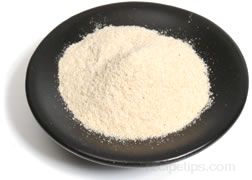
Flour that is ground from substances other than wheat. Non-wheat flours are ground from seeds, roots and tubers, nuts, legumes and other grains.
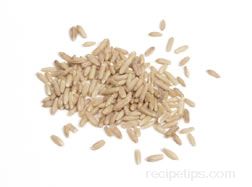
Oats that have been hulled and cleaned, maintaining most of their original nutrients. Oat groats are used in making oatmeal and oat flour.
1. A product created by grinding and sifting various types of substances, such as grains, legumes, nuts, and some vegetables into a powdered form that varies from very soft to coarse in texture.
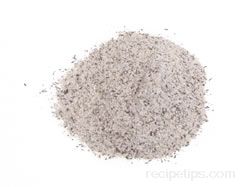
Flour that does not contain gluten, which is a protein found in some types of flour milled from various grains, seeds, legumes, tubers, and nuts.
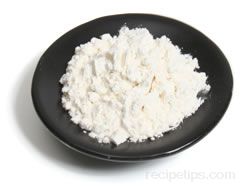
Flour that has been processed from grain to remove the bran and germ, bleached to whiten the appearance, and then reformulated with nutrients, such as thiamin, riboflavin, niacin, Vitamin D, iron, and calcium added in accordance with established government guidelines.
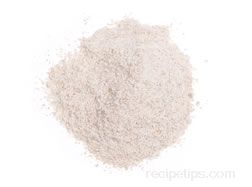
A variety of flour that is ground from the full wheat berry. All parts of the wheat berry are used in the flour including the bran, germ, and the endosperm, which when milled, creates the speckled brown color that is characteristic of the flour.
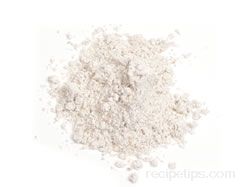
Flour, ground from spelt, which has a mild nutty flavor and is high in protein but low in gluten. It can be substituted for wheat flour in making bread for the gluten and wheat intolerant.
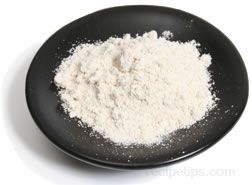
A type of flour made from barley grain. The flour is usually produced from “pearled” barley, which refers to barley that has been scoured and polished to remove the husk and the bran.
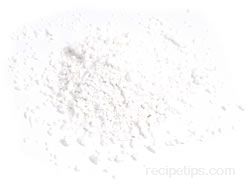
A speciality flour that is produced from white sweet potatoes. It is raw flour, not roasted flour and therefore, does not require cooking before use.
A cereal plant that thrives in temperate climates, preferring cool, moist conditions and growing in areas where other important grains, such as wheat and corn, do not grow well.
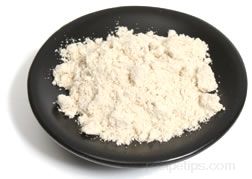
A type of flour milled from sorghum grain. Sorghum flour lacks gluten, so it isn’t suitable for making yeast breads.

A type of flour made from the Yuca root, also known as Cassava root. Another type of flour made from the Yuca root is referred to as Manioc flour, a coarse ground meal made from the grated flesh of the root.
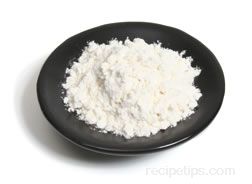
A variety of unbleached flour that is typically milled from hard wheat and blended with other ingredients to create flour that rises well.
A type of flour milled from seeds obtained from the amaranth plant. The small, lens shaped seed or grain is light tan in color and provides a very mild tangy, somewhat peppery or nutty flavor, which may be quite noticeable if the flour is not combined with another flour when preparing baked foods.
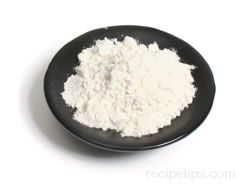
A type of flour that was developed specifically for bread making. Bread flour is unbleached, high-gluten flour that typically contains 99.9 % hard wheat flour with malted barley added to increase the yeast activity.
1. A dessert with a crumb topping made from flour, oats, butter, and brown sugar combined into a mixture that is sprinkled over sliced fruit and baked.
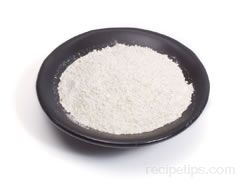
A soft-wheat flour with a fine-texture and a high starch content. Pastry flour is finely ground, but it is not as fine as cake flour.
A variety of gluten free flour obtained by grinding the seeds of the buckwheat plant. Buckwheat flour has a slightly sour flavor and it is often processed with the addition of wheat flour in order to temper the taste.
Top 62 glossary terms found
Displaying 1-20 | Next 20 >>


Advertisement
Advertisement