
Loading
Search
We hope you found what you are searching for. If not, contact us and let us know what your want. We will do the work for you and get back to you when we're done.
wheat germ - Glossary Search
Top 21 glossary terms found
Displaying 1-20 | Next 1 >>
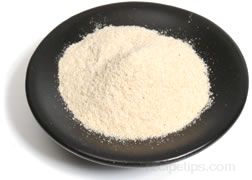
1. A product created by grinding and sifting various types of substances, such as grains, legumes, nuts, and some vegetables into a powdered form that varies from very soft to coarse in texture.
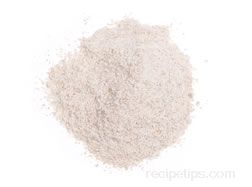
A variety of flour that is ground from the full wheat berry. All parts of the wheat berry are used in the flour including the bran, germ, and the endosperm, which when milled, creates the speckled brown color that is characteristic of the flour.
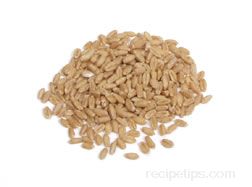
A plant that is a member of the grass family bearing a fruiting head that yields a grain that is most often ground into flour or meal.
A type of wheat flour yeast bread that is made with ground whole-wheat rather than processed white flour or a combination of white and whole wheat flour, such as wheat bread.
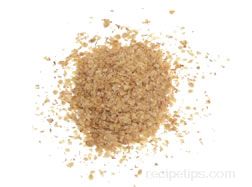
The embryo of a seed or kernel of wheat, located at the bottom center of the kernel next to the stalk.
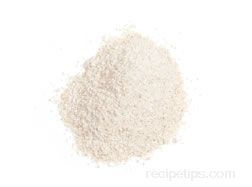
A flour similar to refined white pastry flour, however not all of the bran and germ portions of the wheat kernel have been removed during the milling process.

Wheat germ oil is obtained from the embryo of the wheat kernel. It is a rich source of vitamin E and is often used as a health supplement.
The embryo of a seed or kernel of grain, located at the bottom center of the kernel. The germ is the oily part of a kernel or seed from which a new plant sprouts.
The kernel or seed of food plants that are used as a staple food source throughout the world. Plants such as wheat, barley, corn, oats, rye, and rice, are among the most popular cereal grains.
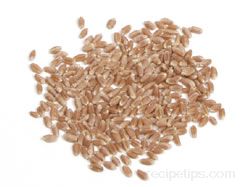
Refers to the entire wheat kernel, without the hull, which contains the bran, germ, and endosperm. Wheat berry or wheatberry, as it is also known, have a tan to reddish brown color and are available as either a hard or soft processed grain.
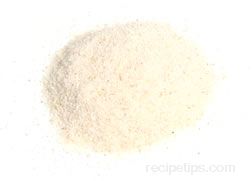
A type of flour or meal made from almost any type of grain, nut, or starchy root, but is most often made from wheat.
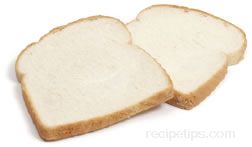
A type of commercially prepared white bread that is fortified with vitamins and minerals in order to replace the nutrients lost during processing.
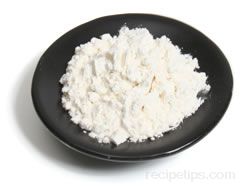
Flour that has been processed from grain to remove the bran and germ, bleached to whiten the appearance, and then reformulated with nutrients, such as thiamin, riboflavin, niacin, Vitamin D, iron, and calcium added in accordance with established government guidelines.
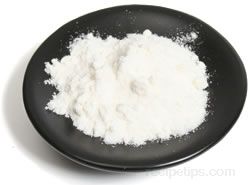
A type of flour produced from grinding polished rice (the bran and germ have been removed) into a powder.
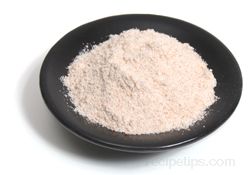
A type of whole-wheat flour that is slightly coarser than regular flour. The Rev. Sylvester Graham, an early advocate of healthier foods, developed the flour.
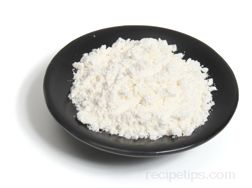
A variety of highly refined flour with the bran and the germ removed, but without chemical bleaching, thus eliminating the majority of nutrients in the flour.
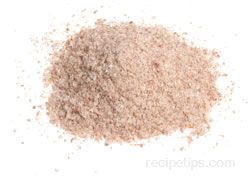
A type of flour made from rice kernels that have been processed to remove the outer hulls, but not the nutritious bran layers covering the kernel.
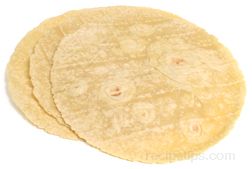
A type of grain cultivated in Ethiopia where it is a staple food crop. Teff is difficult to find in great quantities anywhere else in the world.

The largest portion of a grain kernel containing most of the protein and carbohydrates, but only small quantities of vitamins and minerals.
Essential fatty acids that our bodies are unable to produce without obtaining them from food. Linolenic acid is the primary Omega-3 fatty acid, which can be acquired through many fats, oils, nuts and soybeans.
Top 21 glossary terms found
Displaying 1-20 | Next 1 >>


Advertisement
Advertisement