|
Garlic Preparation | Garlic Cooking | Tips
| Garlic |
|
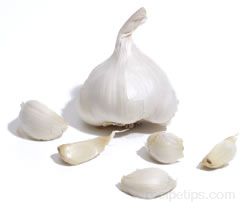
A bulbous plant consisting of single head containing smaller bulbs or cloves individually wrapped in papery skins, which are all wrapped tightly together with another layer of dry papery skin, forming the bulb head. Garlic, like onions, leeks and scallions, are part of the allium family. Garlic, one of the most important and widely used seasonings for food dishes, is available fresh or dried. However, dried garlic is the most commonly used type of garlic and can be found in a white, pink or purple variety. When it is used in a raw form, it is pungent and slightly bitter, but it becomes very mild and sweet when sautéed or baked. |
| Uses:
Garlic is most often used as a flavoring agent but can also be eaten as a vegetable. It is used to flavor many foods, such as salad dressings, vinaigrettes, marinades, sauces, vegetables, meats, soups, and stews. It is often used to make garlic butter and garlic toast. Garlic powder can be substituted if necessary - 1/8 teaspoon of garlic powder is equal to one medium fresh clove of common garlic. |
|
How to Buy:
When selecting, choose firm, plump bulbs that still have their paper-like skin intact. There should be no signs of sprouting, soft spots, or other blemishes. Fresh garlic is readily available year round. Garlic is available in forms other than fresh, such as powder, flakes, oil, and puree. |
|
Storage:
Store fresh garlic in a cool, dark, dry place that is well ventilated for 4 to 6 months, but is best when used within a few weeks. When the cloves have been removed, they can be stored frozen for several months. If garlic has been chopped, minced, or prepared in any way, it should be refrigerated. Be sure to store in an airtight container in the refrigerator to prevent the garlic odor from affecting other foods. |
| Varieties |
|
Garlic
|
Softneck garlic is the common garlic found most often in the supermarket, which is generally one of two varieties, Artichoke and Silverskin. They are whitish in color and their flavor ranges from very mild to very hot. They have the longest storage time of all types of garlic, if stored properly, and are often used to make braids of garlic. Common garlic bulbs can yield 12 to 16 small cloves. |
| Rocambole |
A hardneck variety of garlic, which has a thick hard center stem with even sized cloves growing around it. The cloves do not have much papery skin covering the bulb to protect them, which results in the cloves being knock off if not handled with care. Hardneck garlic has a flowering stalk and their bulbs contain four to twelve cloves. The skins on the cloves are much easier to remove than on the softneck garlic. The Rocambole is the hardneck garlic variety that most closely resembles the softneck common garlic. |
|
Elephant Garlic
|
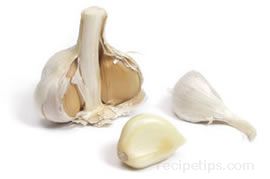
Elephant garlic will yield 6 to 8 large cloves that are 2 to 3 times larger than the smaller cloves of the common garlic. Although it is larger in size, it has a more mild flavor. Its cloves are yellowish in color. Because of its mild flavor, it can be sliced and added to fresh salads. The Elephant garlic is not readily available but can be found in local markets in the fall of the year. Elephant garlic, is also referred to as Giant or Spanish garlic. |
|
Green Garlic
|
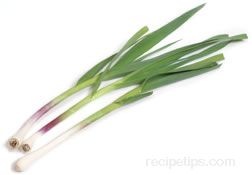
Green garlic is garlic that is harvested when it is immature. It has a definite garlic flavor without the bite of mature garlic. It can be eaten fresh like scallions or green onions but it can also be used in other foods the same as mature garlic. The results will be a more mild garlic flavor. They should be harvested just before using because they cannot be stored for a long period of time like mature garlic. Green garlic can be stored in the refrigerator for 3 or 4 days. Also referred to as spring baby garlic. |
Garlic Preparation
|
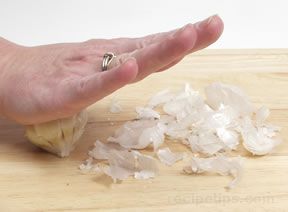
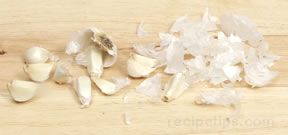
Breaking the bulb: Begin by removing the outer layer of the garlic. With stem pointed into work surface and bulb at a slight angle, press down and away with the heal of your hand. |
|
| The bulb will break into individual "cloves". |
|
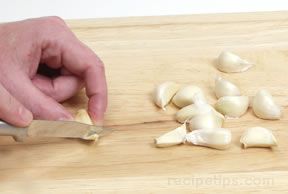
| Peeling the clove: After the cloves have been separated, trim off the root end. |
 |
|
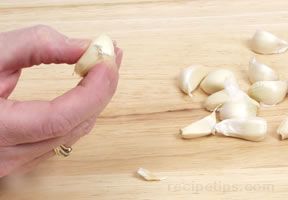
Twist the clove between your fingers to loosen the skin. Once the skin has loosened, remove.
If the garlic is fresh, loosening the skin tends to be more difficult. |
 |
The clove can now be cooked whole, or it can be sliced, chopped, minced, or smashed. The intensity of flavor of fresh garlic depends upon how the garlic is prepared, see examples below.
|
Mild Flavor:
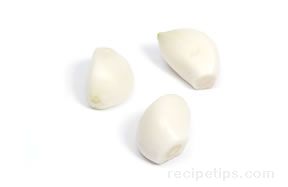
Whole Cloves: The juices and oils of whole garlic have not been extracted, which results in a mild flavor. |
 |
|
Mild Flavor
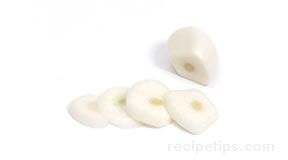
Sliced Cloves: Larger pieces, such as slices, will not totally dissolve when cooked, which will result in a milder flavor than chopped, minced, or smashed garlic. |
 |
|
Medium Flavor
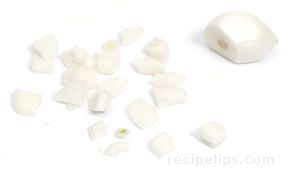
Chopped Cloves: Chopping the garlic into smaller pieces will allow a little more of the juices and oils to be released. This will provide more flavor than slicing and the amount of flavor will depend on the size of the pieces. The smaller they are the more flavor will be released. |
 |
|
Full Flavor
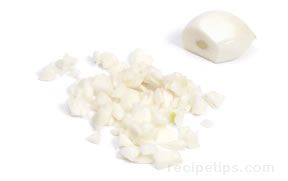
Minced Cloves: Mincing the garlic cloves releases a large amount of juices and oils to provide a strong flavor to the other ingredients of the dish the garlic is cooked with. |
 |
|
Intense Flavor
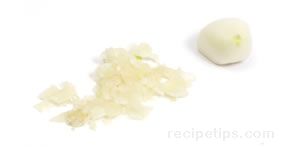
Smashed Cloves: When the cloves have been smashed they provide a very intense flavor because much of its juices and oils are released. The only method that produces more flavor is pressing or pureeing the garlic. |
 |
Garlic Cooking
Caution must be taken when cooking garlic so that it is not overcooked. Garlic burns easily and when it has been cooked too long or on too high of a temperature, it will turn bitter. Some of the common cooking methods are shown below.
Sautéing Garlic
Sautéing is the most common method used for cooking garlic. It will bring out the nutty but savory flavor of the garlic. Garlic can be sautéed in oil or butter but be careful is using butter because is will burn much faster than oil.
- Select a pan or skillet with a heavy bottom that will provide for even heating.
- Heat the oil or butter over medium heat and then add the garlic.
- The garlic should be stirred often to prevent burning.
- If cooking with other ingredients that take longer to cook, such as onions, start cooking the other ingredients and allow them to start to cook before adding the garlic.
Oven Roasting Garlic
Roasting Whole Bulbs:
- Preheat oven to 350°F.
- Remove the skin from the garlic bulb and cut off approximately 1/4 inch of the tips of the garlic.
- Place the bulb on a piece of aluminum foil large enough to wrap the bulb in and drizzle with oil.
- Wrap the bulb tightly in the aluminum foil and place in the preheated oven.
- Roast until cloves are soft, approximately two hours.
Roasting Individual Cloves:
- Preheat oven to 400°F.
- Place the individual cloves in a greased roasting pan and place in the preheated oven.
- Roast until cloves are soft, approximately one hour.
Frying Garlic
- Use a heavy bottomed deep pan, such as a saucepan and add oil.
- Heat oil on the stove until it is very hot but not smoking and then add garlic cloves.
- Fry cloves only until they turn a medium brown and the remove from the heat.
- Watch very carefully as they begin to brown to avoid burning them. Burnt garlic will have a bitter taste.
Tips
- Place garlic cloves in the microwave for 15 seconds and the skins should peel off easily.
- Keep peeled and mince garlic fresh by placing it in a small jar and pouring just enough olive oil over it to cover the garlic and then place it in the refrigerator. It will keep its fresh flavor for about a week.
- Add garlic flavor to your salad by cutting a raw garlic clove in half and rubbing the inside of your bowl with the cut edge of the clove.
- Don't throw out sprouting garlic. Instead, plant the cloves fairly close together in a pot or in the garden (if your climate is suitable at the time). The new shoots that appear will have a mild garlic flavor and can be used in the same manner as regular chives.
- To remove the garlic odor from your hands when working with garlic, wash hands thoroughly and then use some type of stainless steel device that can be worked over and around the areas affected on fingers or hands. Stainless steel contains the mineral nickel which acts as a neutralizer for the garlic odor. Several manufacturers provide a kitchen utensil, similar to a flat bar of soap made of stainless steel, that can be rubbed over the hands after coming in contact with garlic. Other options include using a faucet or stainless steel sink surface to rub hands on after first washing the exposed areas.
|


