|
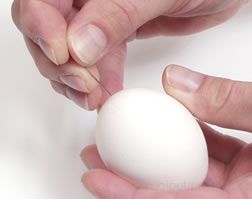
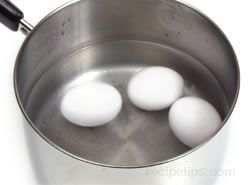
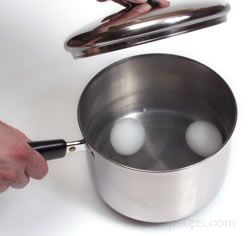
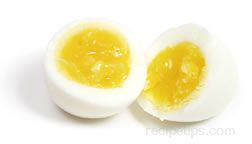
A coddled egg is cooked more slowly than a boiled egg, but basically yields the same results, except that the egg is a bit more tender. The following steps can be used for coddling eggs:
| Note: When coddling eggs, the size of the egg and its temperature at the start of the cooking process will have an effect on the cooking time. An extra large egg used directly from the refrigerator will require the full cooking time as stated above and a medium egg that has been brought up to room temperature before cooking will require only the minimum time listed. |
To stop the cooking process, run cold water over the eggs. It is best to use older eggs for coddling because they peel easier. Soft-cooked coddled eggs are often served in an egg cup and eaten directly from the shell because they are difficult to peel.
Another method used for coddling eggs involves the use of a special porcelain dish with a screw top. The egg, without the shell, is placed in the dish, the cover is screwed on, and the dish is placed in a pan of heated water. When the cooking process is complete, the dish is removed from the water and is used to serve the egg. |