|
Food Labels | Food Processors Get Involved | More Information
 |
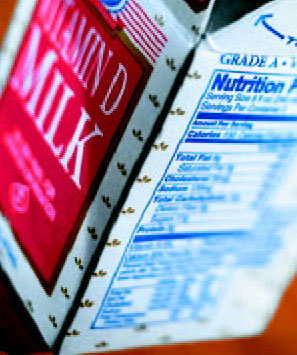
Food processors use the food label to provide consumers with the information they need to make informed food choices, and to build healthful diets. The food industry encourages consumers to read food labels to learn how to make processed foods part of a well-balanced diet. Here is some of the information you will find on a food label. |
- Serving size—Similar food products must list the same serving sizes. Serving sizes help you easily compare different brands of similar products.
- Calories, fat, cholesterol, sodium, carbohydrates, and protein—The Nutrition Facts on the label lists amounts of calories, fat, cholesterol, sodium, carbohydrates, and protein to help consumers regulate their diets. This information is beneficial to all consumers, and especially to people with special health conditions.
- Vitamins and minerals—Food companies list the amounts of vitamins A and C, calcium, and iron their products contain. To better inform health-conscious consumers, many companies voluntarily list other nutrients as well.
|
 |
- Nutrient content claims—Did you ever wonder what “free,” “lite,” “low,” or “reduced fat” mean? These terms can be used only if the food meets strict government definitions. “Calorie free” means the product has fewer than five calories per serving. “Reduced fat” means it has at least 25 percent less fat. Consumers can compare claims on different brands to make healthful choices.
|
- Health claims—Like nutrient content claims, health claims are strictly regulated. They describe the relationship between a food or food component and a health-related condition. Approved health claims include calcium and osteoporosis, fat and cancer, saturated fat and cholesterol and heart disease, fiber and cancer, fruits and vegetables and cancer, and sodium and hypertension.
- Percent Daily Values—Percent Daily Values are reference numbers based on nutrition guidelines. They help consumers understand how much of a nutrient a food contributes to their diet. Use Percent Daily Values to compare your diet to current nutrition recommendations.
- Ingredient List—The ingredient list tells you what is in the food, listed by weight from most to least. The ingredient list is also useful for people with a food allergy.
|
|
Food Processors Get Involved |
|
In addition to food safety, nutrition is one of the food industry’s top concerns. The industry helped the federal government develop the new food label. Several years ago the National Food Processors Association (NFPA) worked with its Member companies to produce educational information about the new food label, in a book called Label Facts for Healthful Eating. (To order, see below.)
Today, food processors are leading efforts in food allergen labeling. NFPA and its Member companies have developed voluntary allergen labeling guidelines for food processors. The guidelines help food companies use plain, clear language to tell consumers about possible product allergens. |
| More Information |
|
www.nfpa-food.org
(To order Label Facts for Healthful Eating, click on “Publications.”)
www.safefood.org
NFPA’s consumer website)
www.health.gov/dietaryguidelines
(Dietary Guidelines for Americans) |
Developed by the National Food Processors Association • www.nfpa-food.org |


