|
Symptoms | Food Processing Makes Food Safe
How Can I Help? | Fast Facts | More Information
|

|
Foodborne illness is caused by eating foods or beverages contaminated with harmful bacteria, viruses, or parasites. The Centers for Disease Control and Prevention (CDC) estimate that more than 300,000 Americans are hospitalized and 5,000 die each year from foodborne illness. Some harmful foodborne pathogens include Campylobacter, Salmonella, E. coli O157:H7, and Listeria monocytogenes. |
| Anyone—young or old, weak or strong—can get sick from eating contaminated food. However, infants and children, the elderly, and people with weakened immune systems (due to HIV, diabetes, cancer, and other illnesses) are at increased risk of becoming ill. |
| Symptoms |
|
Diarrhea and vomiting are the most common symptoms of foodborne illness. Most symptoms disappear after several hours to a day or two. In severe cases, excessive fluid loss can cause dehydration, which can lead to dizziness, thirst, and fainting. Some illnesses can be life threatening. |
|
Food Processing Makes Foods Safe |
|
Food processing companies take many steps to keep foods safe. Many heat foods (cooking, pasteurizing, canning) to kill bacteria. Processors also carefully monitor each processing step where safety is critical. Monitoring procedures may include periodically checking cooking temperatures and testing food contact surfaces for harmful bacteria. |
| How Can I Help? |
|
Most illnesses occur when consumers handle foods improperly. Below are safety tips for consumers from the Partnership for Food Safety Education.
- Separate—Bacteria are spread through cross contamination (when a raw food or its juices, especially meat and seafood, touches another food). Always separate raw meat, poultry, and seafood from other foods.
|
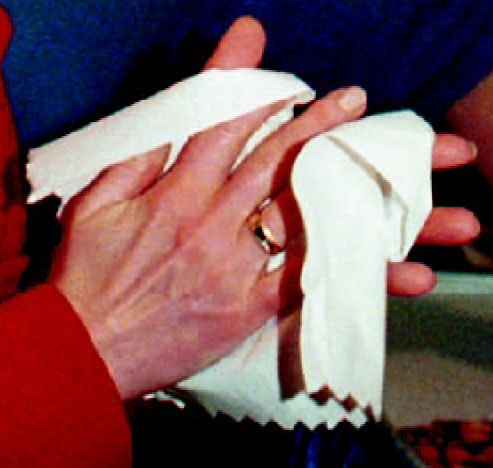
- Soap Up—Wash your hands in hot soapy water before preparing food and after using the bathroom, changing diapers, cleaning litter boxes, and handling pets. Wash cutting boards, knives, utensils, and counters after preparing each food item.
- Heat It Up—Cook all meats, including ground beef, thoroughly to kill bacteria. Cook fish until it is opaque and flakes easily. Make sure the egg yolk and white are firm, not runny.
|
 |
- Chill Out—Refrigeration keeps bacteria from multiplying. Health officials recommend keeping your refrigerator at 40°F and your freezer at 0°F. Promptly refrigerate grocery items and leftovers. Thaw and marinate all meats in the refrigerator— not on the counter.
|
| Fast Facts |
- Foodborne illness should not be confused with food allergy or food intolerance. Food allergy is a negative reaction to proteins in certain foods that only a few people experience. Foodborne illness can affect anyone.
- Symptoms may not appear for hours, days, or even weeks. The last food you ate is probably not to blame.
- Some bacteria are everywhere. Listeria monocytogenes has been found in soil, water, sewage—even on dishcloths, toothbrushes, and counters.
|
| More Information |
|
www.nfpa-food.org
(National Food Processors Association, NFPA)
www.safefood.org
(NFPA’s consumer website)
www.fightbac.org/main.cfm
(Partnership for Food Safety Education)
www.cdc.gov/health/foodill.htm
(Centers for Disease Control and Prevention)
www.foodsafety.gov
(gateway to government food safety information) |
Developed by the National Food Processors Association • www.nfpa-food.org |


