
Loading
Search
We hope you found what you are searching for. If not, contact us and let us know what your want. We will do the work for you and get back to you when we're done.
ulster fry - Knowledge Search
Top 4 articles found
Displaying 1-4
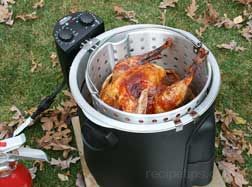
Deep-frying, also known as deep-fat frying, is a process of immersing food in a deep pot containing heated oil. The turkey cooks quickly, producing a crispy surface over a tender and moist interior. It is becoming a popular alternative to roasting a whole turkey.
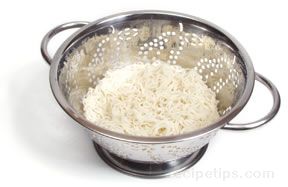
A wok, which has deep tapered sides, is a traditional type pan used for stir-frying. A wok works well but is not a necessity. A nonstick deep skillet also works very well. If rice noodles or mung bean noodles are going to be added to the stir-fry, they are sometimes deep-fried in the wok or deep skillet first and then set aside while other ingredients are stir-fried according to the recipe.
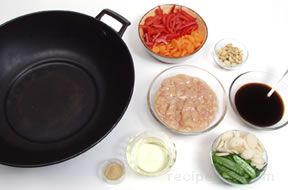
Stir-frying, like sautéing, is a cooking method that quickly cooks the turkey in a little oil, using high heat. The difference between the two methods is that sautéing cooks serving size pieces of meat and stir-frying involves cooking smaller size pieces that have been cut into strips, cubes or diced pieces all similar in size.
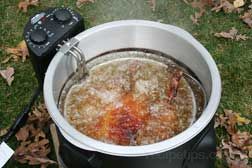
Extreme care is necessary to ensure safety when deep-frying a whole turkey. Because the required equipment can be cumbersome and the large quantity of hot oil necessary for cooking a whole bird can be dangerous, deep-frying a whole turkey is much less safe than deep-frying food on a smaller scale.
Top 4 articles found
Displaying 1-4


Advertisement
Advertisement