Also, see How to Make:Easter Marshmallow Treats | Easter Nests
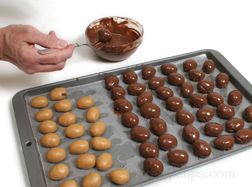
Easter time is a great time to make your own special treats. There are many fun Easter treats that can be made, but the chocolate Easter eggs below will be a favorite with everyone, young and old.
Method One: Traditional Frying Methods | Method Two: Egg Ring Frying Method
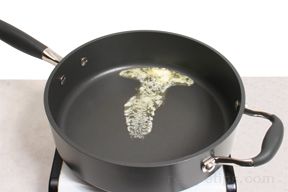
Frying is a cooking method that is convenient, fast, and easy to do. Whether eggs are cooked "sunny side up" or "over hard," frying is, perhaps, the most popular method for cooking eggs.
Method One: Cooked in the Shell | Method Two: Cooked in Coddling Dishes
A coddled egg is one that is cooked more slowly than a boiled egg, but basically, it yields similar results, except that the egg becomes quite tender, more so than with the hard-cooked method.
Cooking | Peeling | Serving
Using the term boiled when referring to eggs cooked in the shell can be misleading, because eggs known as "hard-boiled" should never be cooked at a full boil for the duration of the cooking time.
Easter eggs can be colored using common foods that do not require purchasing an egg coloring kit and commercial dyes. Although the color may not be as bright, it is an option for anyone wanting to color eggs naturally.
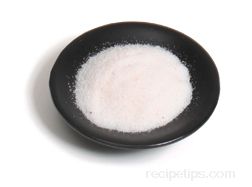
Found in regions adjacent to the Himalayan mountain range, the Himalayan Pink Salt is a natural, coarse-grained salt containing a high concentration of minerals.
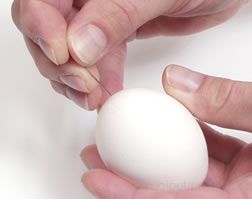
Eggs that are pasteurized to destroy any bacteria that may be present. The pasteurization process heats the eggs for a period of time to destroy the bacteria, but the process does not cook the eggs.
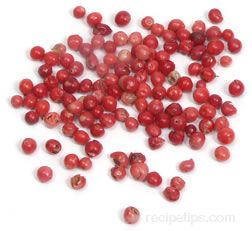
A berry that is grown on trees in tropical areas that is not actually a true peppercorn. The pink peppercorn is a very small berry, similar in appearance to a peppercorn, that has a thin papery texture and a mildly sweet flavor.