RecipeTips.Com Home cooking tips & advice | Knowledge | All About Blueberries
Join Now | Sign In | RSS Feeds RSS Feeds
All About Blueberries: Easy How-To Cooking Tips & Advice: RecipeTips.com
Recipes Cooking Tips & Advice Glossary Community Videos
hints
e-Newsletter
RecipeTips.com Newsletter Sign Up

All About Blueberries

print Print All About Blueberries article  |  email Email All About Blueberries article  |  rate this article Rate this article  | Bookmarks
Kitchen Advice > All About Fruit > All About Blueberries

Blueberry Preparation | Blueberry Recipes | Tips

Blueberries

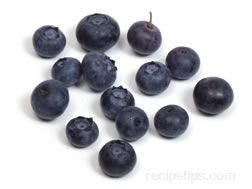
A small, round, dark blue skinned berry native to North America. They are grown mostly in Northern United States and Canada. Some can be found grown in Northern Europe and Australia. There are many varieties of blueberries that differ slightly in size and taste. They are grown mostly on low bushes but some of the blueberry bushes grow to be 6 to 7 feet tall. The berries are dark blue in color and have a smooth outer skin that has a very thin, silver waxy coating that is called bloom. They have a sweet taste and contain soft seeds that do not need to be removed before eating the berries. Blueberries are commercially cultivated to satisfy demand but the best blueberries are the wild berries you pick yourself. Cultivated blueberries are 2 to 3 times larger than wild blueberries but are not as flavorful. They are in season from late spring to early fall.

Uses:

The berries can be eaten raw, but are also added to fruit salads, pancakes, waffles, muffins, cakes, breads, pies, ice cream, and yogurt or cooked in various desserts. They are also cooked up to make thick sweet toppings for desserts, such as crępes and cheesecake. Blueberries can also be cooked with sugar syrup to produce jams and jellies.

At Their Best:

Fresh blueberries are most readily available starting in mid April and are available into late September or October. The first of the blueberries begin in the southern states and availability moves north as the weather warms through the season.

How to Buy:

Look for berries that have the silvery bloom coating, are plump and uniform in size, and are not shriveled. If the blueberries do not have the bloom coating, it is an indication that they are not fresh or that they have been washed. Washed berries will not keep as long as unwashed berries. The blueberries should be deep-purple blue to almost a bluish black color. If they have a reddish color to them, they are not ripe yet, but can still be used if they are going to be cooked. Check the bottom of the blueberry container for mold and look for blue stains from the berries. Berries should be firm, dry, and move freely in the container. The blue stains may be from crushed or overripe berries.

When buying frozen berries, be sure they are separated and loose in the bag. If they are frozen into a clump, it is a sign that they have at least partially thawed and then been refrozen.

Storage:

Store unwashed blueberries in the refrigerator for a week to 10 days. Be sure to remove any damaged or moldy berries so that they do not contaminate the others. Blueberries can be frozen or canned for storage. Do not wash fresh or frozen blueberries until ready to use. See below for instructions on freezing blueberries.

Nutrition:

Blueberries (1 cup)

Calories
Total Fat (g)
Cholesterol (mg)
Total Carbohydrates (g)
Sugar (g)
Vitamin A (%DV)
Calcium (%DV)

100
1
0
27
11
0
0
Calories From Fat
Saturated Fat (g)
Sodium (mg)
Dietary Fiber (g)
Protein (g)
Vitamin C (%DV)
Iron (%DV)

10
0
0
3
1
15
0


Varieties:

Wild Blueberries

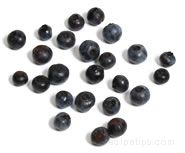
A lowbush variety of blueberries that grows on a bushlike shrub that generally ranges from 1 to 3 feet in height. The berries grow in bunches of 3 or 4 and are quite small in comparison to the cultivated varieties, but the wild blueberries are more flavorful. They are deep-purple blue to almost a bluish black color with a light silvery coating called "bloom," which is a sign of freshness. It is much harder to find wild blueberries and they are usually only sold in local markets when they are in season. They are grown in Canada and throughout the United States wherever there is acidic soil and sufficient moisture, and when the climate is cool.

Cultivated Blueberries

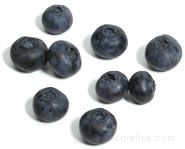
Cultivated blueberries are grown to satisfy the demand for blueberries and are the type that are generally available in food stores. They are 2 to 3 times larger than wild blueberries but do not have as an intense flavor. There are two types, which are highbrush and rabbiteye. The shrubs for the cultivated blueberries can grow to be more than 10 feet tall if not cut back. Cultivated blueberries are deep blue in color and have the same white bloom as the wild blueberries.

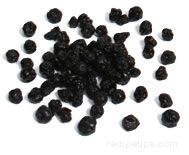
Dried Blueberries

Blueberries that have had the majority of their moisture removed through some method of dehydration. Blueberries are dried using the methods shown below:

  • Fresh and frozen berries can be dehydrated by exposing them to hot air until their moisture level has been reduced significantly.
  • Osmotically dried blueberries are placed in a vacuum chamber and slowly infused with a syrup solution. They are then dried, producing a shelf stable product that is used in other products, such as pastries, muffins and sauces.
  • Freeze dried blueberries are quick frozen and dehydrated to maintain color and shape. They are added to cereals, snack mixes or eaten on their own.
  • Drum dried blueberries are tumbled in a drum with hot air to produce a powder form of blueberries.

Dried blueberries have a concentrated flavor and chewy texture, making them a great snack. They can also be added to baked goods, salads, and cereal. They are available in specialty markets but as their popularity grows availability will increase.

Processed Blueberries

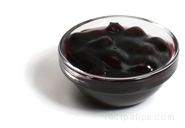
When fresh blueberries are not available, there are products that can be used in their place. Frozen berries are available in the freezer area of the food stores, canned blueberries can be drained and add to other foods, and blueberries in a sauce are available for pies and other desserts.

Blueberry Preparation

Storage Preparation | Freezing Blueberries

Because blueberries are very perishable, do not wash them until just before consuming or cooking. Blueberries do not need to be peeled, seeded, cored or trimmed before using. When adding to a dessert or other dishes, prepare and cook as instructed by the recipe. Simple blueberry preparation is shown below.

Blueberry Storage Preparation

If you are not using the berries immediately, gently pour them into a bowl and carefully pick through them and discard any that are moldy, crushed, soft or shriveled. If there are any stems still remaining on the berries, remove them and discard. Do not wash the berries before storing.

Make sure the blueberries are dry and then return them to the container they were in when purchased. Place in the refrigerator and store up to 10 days.

Preparing for Use

When ready to use, go through the blueberries as shown above. Place the berries in a colander and dip into a bowl of cold water. Gently swish in the water and then allow the berries to drain.

Carefully spread out in a single layer and gently pat dry with a paper towel.

When blueberries are completely dry they can be eaten or added to other ingredients as instructed by the recipe.

Freezing Blueberries

If you are not going to be using the blueberries right away, they can be frozen for future use. Go through the berries and discard any unwanted berries.

Spread the blueberries out in a single layer on a cookie sheet. Do not wash first. Be sure berries are completely dry.

Completely cover the berries and cookie sheet with plastic wrap.

Place the blueberries in the freezer for 1 to 2 hours until they are completely frozen.

Once frozen, take out and place in an airtight sealable bag. Place back into the freezer immediately.

When you are ready to use the blueberries, remove the bag from the freezer and take out as many blueberries as you need. If you are not using the entire bag, return the unused berries to the freezer. If the blueberries are sealed in the bag properly, they can be stored in the freezer for up to two years.

Blueberry Recipes

Blueberry Topping | Blueberry Nut Bread | Blueberry Pasta Salad

There are many ways in which blueberries can be used. They make a great snack when just eaten on their own or they can be made into a sauce or topping to serve with other foods, such as cheesecake, ice cream, yogurt, pancakes and waffles. Fresh, frozen or dried, they can be added as an ingredient in many recipes. Some foods you will see blueberries added to are cakes, muffins, breads, desserts, pies, sorbets, salads, and a few savory dishes. Many times frozen blueberries can be used in place of fresh without compromising the end product. Shown below are just a few sample of how blueberries can be used.

Blueberry Topping

Carefully pick through fresh blueberries and discard any that are moldy, crushed, soft or shriveled. If there are any stems still remaining on the berries, remove them and discard. Check through enough berries to produce 2 1/2 cups of cleaned blueberries.

Place the blueberries in a strainer and gently swish in cold water. Allow excess moisture to drain off.

Mix the ingredients below together in a saucepan and stir until blended. Then place the blueberries in the saucepan.

  • 1 tbsp. cornstarch
  • 1 1/2 tsp. lemon juice
  • 1/8 cup water

Cook the blueberries over medium heat until mixture has thickened and is translucent. Stir the berries often while cooking. As the sauce thickens, add 1/8 to 1/4 cup of sugar. Add to desired sweetness.

The topping can be served warm or cool, depending on what you are using it for. It can be used as a topping on cheesecake, ice cream, pancakes, and many other foods.

This topping can also be used in recipes that call for a can of blueberries. Allow the topping to cool before adding it to other ingredients.

Blueberry Nut Bread

If using fresh blueberries, carefully pick through and discard any that are moldy, crushed, soft or shriveled. If there are any stems still remaining on the berries, remove them and discard. Gently swish in cold water and then allow the berries to drain. Pat berries dry with paper towels.

If using frozen blueberries that you froze yourself, they should not have been rinsed before freezing. These blueberries should be rinsed quickly under cold water, drained and patted dry. Then place back in the freezer until just before they are to be added to the batter.

Grease and flour a 9 x 5 x 3 inch loaf pan or two 8 x 4 x 2 1/2 inch pans and set aside until batter is finished. Preheat oven to 350° F.

In a mixing bowl, mix the following ingredients together:

  • 3 cups flour
  • 1 cup sugar
  • 1 tbsp. baking powder
  • 1/2 tsp. salt
  • 1/4 tsp. baking soda

Stir until well mixed.

Make a well in the center of the dry ingredients. Set this bowl aside.

In a small to medium size mixing bowl, add 1 egg and beat slightly. Then add the following ingredients:

  • 1 2/3 cups milk
  • 1/4 cup vegetable oil
  • 1 1/2 tsp. vanilla

Beat these ingredients on low until they are well blended.

Pour egg and milk mixture into the well of dry ingredients in the other bowl.
Stir the outer edges of dry ingredients into the egg and milk mixture. Stir only until all the dry ingredients are moistened.

Add and fold in:

  • 1 tsp. finely grated lemon zest
  • 1/2 cup finely chopped pecans (save approximately 1 to 1 1/2 tsp. of pecans to sprinkle on the top of the loaf before baking)
Fold in 1 1/2 cups of blueberries. If using frozen blueberries, do not take out of freezer until just before adding to prevent them from bleeding into the batter. Gently fold blueberries into the batter just until evenly distributed.
Place the batter in the greased and floured loaf pan. Lightly press batter evenly into the pan.
Sprinkle the top of the loaf with the pecan crumbs that were set aside. Place in the preheated oven and bake for 60 to 70 minutes if using a 9 x 5 x 3 inch loaf pan and for 40 to 50 minutes if using two 8 x 4 x 2 1/2 inch pans. Do not overbake.
Check for doneness by inserting a toothpick into the center of the loaf. If it comes out clean, the bread is done.
Allow the bread to remain in the pan and place on a rack to cool.
When loaf has cooled, remove from the pan, slice and serve or wrap in a plastic bag to store until ready to serve.

Blueberry Pasta Salad

This recipe calls for dried blueberries, which adds flavor and texture to the salad.

Boil 1 pound of fusilli pasta and during the last 2 or 3 minutes of cooking, add 1 cup of bite size pieces of sugar snap peas and 1 cup of carrot slices cut into triangles or half moons. This will blanch the vegetables.

When done, rinse with cold water to cool and then allow the pasta and vegetables to drain well.

In a medium bowl add the following dressing ingredients:

  • 1 cup light mayonnaise
  • 1/2 cup light sour cream
  • 1 tbsp. finely chopped mint
  • 1 tsp. garlic powder
  • 1/2 tbsp. onion powder

Stir these ingredients until they are well blended and then add salt and pepper to taste.

Place the pasta and vegetables in a large bowl and add the following ingredients:

  • 1 small can sliced waterchestnuts, cut in halves
  • 1 lb. turkey, cooked and cubed
  • 1 kiwi, peeled and cut in pieces
  • 4 oz. dried blueberries

Add the dressing and toss all together until well coated. Refrigerate for 1 hour or until chilled.

Before serving, sprinkle with 2 tbsp. of fresh lime juice and stir until well distributed. Spoon onto a salad plate and serve.

Note: When blueberries are cooked in a recipe containing a fair amount of baking soda, the berries will have a tendency to turn a dark greenish brown color. The baking soda creates an alkaline environment, which causes the yellow pigments in the blueberries to turn green. The baking soda is used to counteract acidity of ingredients, such as yogurt and buttermilk. To eliminate the discoloring of the blueberries, substitute the same amount of milk as what is called for in buttermilk or yogurt, and replace each 1/2 teaspoon of baking soda with 1 teaspoon of baking powder.

Tips

  • When adding fresh blueberries to a batter that the berries have a tendency to drop to the bottom, such as in a cake batter, sprinkle the blueberries with flour before adding to the batter. The flour will help prevent them from dropping in the batter.
  • When baking with blueberries, they should be the last ingredient added so that they do not get over mixed and begin to break up. Broken berries will cause streaking in the batter.
  • One pound of blueberries is equal to 2 1/2 to 2 3/4 cups fresh or frozen blueberries. One pint is equal to 2 cups of berries. A 10-oz. package of frozen blueberries equals 1 1/2 cups.
  • When adding frozen blueberries to a batter, add them to the batter while they are still frozen to prevent them from bleeding into the batter.
  • When using canned blueberries, be sure to drain well and the pat thoroughly with paper towels to prevent blue streaking in your recipe.
  • Add a little lemon juice to blueberries to enhance their flavor.
More All About Fruit >>

All About Blueberries article - Related Content

Collections
Cakes

Cakes

Browse our selection of cake recipes for birthdays or any occassion.
Pie Recipes

Pie Recipes

We have a huge selection of pie recipes to choose from including fruit pies, cream pies and custard
Cookie Recipes

Cookie Recipes

Browse our cookie recipes, we have a lot to choose from.
Bars

Bars

View our fabulous assortment of bar recipes.
Recipes view more
Blueberry Buckle with Fresh Berries

Blueberry Buckle with Fresh Berries

The fresh blueberries give this sweet dessert an abundance of flavor. The texture of the crispy topping compliment the flavor of the blueberry and cake-like bottom.
Blueberry Grunt

Blueberry Grunt

This steamed dessert has a delicious blueberry bottom with a dumpling-like topping. You can create this great dessert without even having to heat up your oven.
Blueberry Apple Pie

Blueberry Apple Pie

Lucious combination of fruit makes for a delicious pie.
Blueberry Buckle

Blueberry Buckle

A rustic confection.
Blueberry and Peach Tart

Blueberry and Peach Tart

The combination of blueberries and peaches will make this one of your summer time favorites.
Cooking Tips & Advice
How to Make Blueberry Grunt

How to Make Blueberry Grunt

Also, see How to Make:Peach Cobbler | Apple Crisp | Apple Crumble | Blueberry BuckleApple Pandowdy | Apple Brown Betty | Peach Slump Blueberry Grunt A grunt is a ...
How to Make Blueberry Buckle

How to Make Blueberry Buckle

Also, see How to Make:Peach Cobbler | Apple Crisp | Apple CrumbleApple Pandowdy | Apple Brown Betty | Blueberry Grunt | Peach Slump Blueberry Buckle A Buckle is a ...
Glossary Terms
Blueberry

Blueberry

A somewhat small, round berry that is dark blue in color with a crowned opening at the opposite end of its stem. Wild Blueberries are very small in size in comparison to the ...
Cranberry and Blueberry Bread

Cranberry and Blueberry Bread

A type of yeast bread made with white flour that is loaded with cranberries and blueberries. The berries make the bread moist and provide a slight sweetness and tartness. The ...
USDA Nutrition Facts

Blueberries wild raw Alaska Native

Blueberries wild frozen Alaska Native

Blueberries frozen sweetened

Blueberries frozen unsweetened

Blueberries canned heavy syrup solids and liquids

Quick Tags
  All About Fruit   Kitchen Advice
Summer Of Grilling Giveaway
Advertise With Us ADVERTISEMENT
Daily Feature
Grilled Fiesta Barbecued Chicken Salad Recipe
view past daily features
Party Planner
RecipeTips.Com Home cooking tips & advice | Knowledge | All About Blueberries
Join Now | Sign In | RSS Feeds RSS Feeds
Reproduction in whole or in part without written permission is strictly prohibited.
© Copyright 2008 Tecstra Systems, All Rights Reserved, RecipeTips.Com