Mandatory Inspection | Quality and Yield Grading
Mandatory Inspection
|
An important step in assuring a safe food supply is mandatory inspection by government agencies. The USDA (United States Department of Agriculture) requires that certain foods, such as poultry and meat, be inspected before they reach the consumer. For example, when meat is inspected, the mandatory inspection by the FSIS (Food Safety and Inspection Service) arm of the USDA concentrates on the safety and wholesomeness of the meat and not necessarily the quality. Visual inspection for animal diseases is performed as well a number of scientific tests on a statistical sampling of the meat. The tests are used to determine if any biological or chemical contamination is present in the meat. The primary concern is for the safety of the consumer.
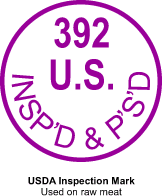
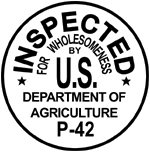
Shown at the right are two of the seals that are used to signify that meat has been inspected and meets the criteria mandated by the USDA. |
Raw Meat Inspection Seal
|
|
Poultry Inspection Seal
|
Quality and Yield Grading
|
Unlike the mandatory inspection for safety, which is paid through government funding, food grading, especially of meat, is an option paid for by the processing companies that request the service. When grading beef, for example, the processing companies use the grading information to determine how each beef carcass is best used. Beef is graded for quality and yield. The grade of the beef and the yield grade are stamped in several places on the carcass with an edible purple vegetable dye. Since grading is optional, not all beef sold in the United States is graded. Beef that has not been graded is known as "No Roll" because the rolling grading stamp is not applied to the exterior fat as is the case with graded beef.
Quality Grading |
|
Beef Grading
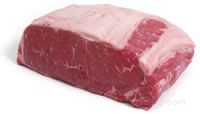 In terms of quality, beef is graded according to degree of marbling (the small pieces of fat within the meat that increases flavor and tenderness), age of the animal (the best meat is from younger animals), and miscellaneous factors, such as color, texture, and firmness of the meat. In terms of quality, beef is graded according to degree of marbling (the small pieces of fat within the meat that increases flavor and tenderness), age of the animal (the best meat is from younger animals), and miscellaneous factors, such as color, texture, and firmness of the meat.
 Of the eight grade levels given to beef, the top three are the grades most often available to the consumer, constituting sixty to seventy percent of the graded beef. The top three grades are: Prime, Choice, and Select. Of the eight grade levels given to beef, the top three are the grades most often available to the consumer, constituting sixty to seventy percent of the graded beef. The top three grades are: Prime, Choice, and Select.
The other five grades given to beef are: Standard, Commercial, Utility, Cutter, and Canner. Standard and Commercial grades are often sold in food stores as a store brand with no indication of the actual grade. Utility, Cutter, and Canner grades are never found in food stores, but are generally used for commercially canned meat products and sausages. |
|
Pork Grading
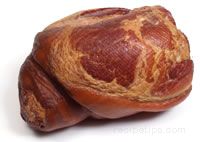 Pork is designated with only two different USDA grade levels: Acceptable and Utility. Pork graded as Acceptable, which is the only grade found in a retail store, indicates that the meat has a high ratio of lean meat to bone and fat. The Utility grade is used by food processors to create products containing pork. The meat may lack the texture and firmness found in market ready cuts and usually contains a higher level of water, but it is quite suitable for processed meat products. Pork is designated with only two different USDA grade levels: Acceptable and Utility. Pork graded as Acceptable, which is the only grade found in a retail store, indicates that the meat has a high ratio of lean meat to bone and fat. The Utility grade is used by food processors to create products containing pork. The meat may lack the texture and firmness found in market ready cuts and usually contains a higher level of water, but it is quite suitable for processed meat products.
|
|
Poultry Grading
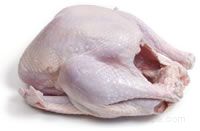
Poultry is graded according to the following criteria: conformation (the proportion of meat to bone), fat coverage, fleshing, absence of pinfeathers, and the absence of damage, including cuts, bruises, and broken bones.
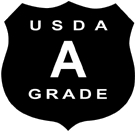 Poultry is graded A, B, or C. Most chickens and turkeys sold in food stores are designated "Grade A", meaning that they are of the highest quality. "Grade A" poultry has no surface damage such as broken skin, tears, bruises, or cuts and all pinfeathers have been removed. There are no broken bones and the bird is plump and has a pleasing shape. Poultry that does not receive a "Grade A "seal is still safe to eat, but the appearance and overall quality may be less than ideal. Poultry is graded A, B, or C. Most chickens and turkeys sold in food stores are designated "Grade A", meaning that they are of the highest quality. "Grade A" poultry has no surface damage such as broken skin, tears, bruises, or cuts and all pinfeathers have been removed. There are no broken bones and the bird is plump and has a pleasing shape. Poultry that does not receive a "Grade A "seal is still safe to eat, but the appearance and overall quality may be less than ideal.
|
|
 In addition to the quality grading, the USDA uses a yield scale to indicate the ratio of lean to fat within an animal carcass. Beef, for example, is given a yield grade 1 if the carcass provides the most meat and least amount of fat, while yield grade 5 indicates carcasses with the most fat. The yield grade is of particular importance to consumers interested in purchasing a whole or half beef carcass with the greatest percentage of usable meat. In addition to the quality grading, the USDA uses a yield scale to indicate the ratio of lean to fat within an animal carcass. Beef, for example, is given a yield grade 1 if the carcass provides the most meat and least amount of fat, while yield grade 5 indicates carcasses with the most fat. The yield grade is of particular importance to consumers interested in purchasing a whole or half beef carcass with the greatest percentage of usable meat.
| |


