|
Described below are some of the products (including flour) created directly from wheat. Other than a few exceptions, products that are created after the grain has been milled into flour are not described, because they are so numerous.
|
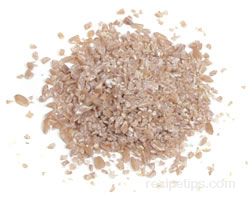
Cracked WheatCracked wheat is a form of wheat in which whole-wheat berries have been crushed or "cracked" into smaller pieces. Cracked wheat is used as an ingredient in cracked-grain and multi-grain breads, pilafs, stuffing, and breakfast cereals, providing a crunchy texture and a nutty flavor. One major advantage that cracked wheat has over whole-grain wheat is that it cooks faster, because of the small size. Cracked wheat, which is available in coarse, medium, and fine textures, can be found in many large food stores, as well as natural food stores and health food stores.
|
Bulgur
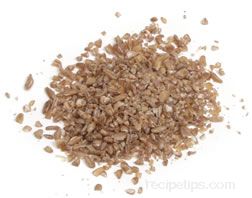
Bulgur is whole wheat that has been parboiled, dried, and cracked. This process decreases the cooking time required when preparing bulgur wheat. When cooked, bulgur has a chewy texture and a delicious nutty flavor. Bulgur produced from hard red wheat is darker in color and has a richer flavor than bulgur produced from soft white wheat.
Bulgur is a traditional ingredient in Middle Eastern cooking. It can be used as an ingredient in salads, soups, stews, casseroles, or stuffing. It can also be used as an extender for some meat products, such as ground beef or lamb.
Bulgur is available in several granule sizes. The finer the grind, the less time is required for cooking the bulgur. Since bulgur contains the oily wheat germ, it can become rancid over time. Long-term storage is not an option unless the bulgur is tightly wrapped and stored in the freezer.
|
Wheat Flour
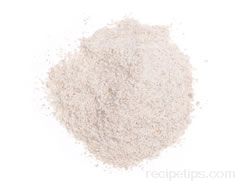
Flour produced from wheat grain is created by milling the wheat grain into a powdered substance that varies in texture from very fine to coarse. When wheat flour is mixed with liquid, gluten is formed. Gluten is the substance that provides dough with elasticity and the ability to stretch, while the leavening agent produces carbon dioxide gas, enabling the dough to rise effectively. These characteristics have resulted in the universal popularity of wheat flour varieties for bread making and baking. The more protein in the flour (as is the case with hard wheat flour), the more gluten is formed when the flour is mixed with liquid; however, in some recipes, the ability of the dough to rise excessively is not desirable, so it is best to use flour with less gluten forming capability, such as soft wheat varieties. There are many types of wheat flour available including all-purpose flour, bread flour, whole-wheat flour, self-rising flour, cake flour, and pastry flour.
|
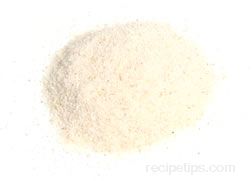
FarinaFarina is a type of flour or meal made from almost any type of grain, nut, or starchy root, but is most often made from wheat grain. It is usually boiled in water to create a bland tasting hot breakfast cereal, or it can be used as an ingredient in other dishes. Farina is produced by removing the bran from hulled wheat grains and then grinding the grains into a powder. The endosperm and germ are the components of the grain that remain in the farina.
|
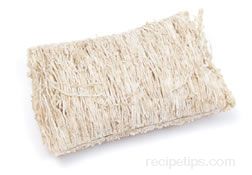
Shredded WheatShredded wheat is made from wheat grains that have been steel-cut and then processed into small bits. The bits are processed into continuous narrow strands of wheat that are grouped to form various shapes; then the shapes (usually a rectangular or biscuit shape) are roasted and packaged as a popular ready-to-eat breakfast food.
|
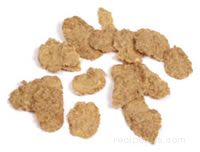
Wheat FlakesWhole-wheat flakes are kernels of wheat that are steamed, flattened through rollers, and then flaked. The flakes retain most of the nutritional value of the whole-wheat grains. Wheat flakes are still considered to be a form of uncooked grain and not a ready-to-eat cereal, but ready-to-eat-cereals are produced from the flakes.
|
Couscous
Couscous is produced from cracked durum wheat that has been steamed and allowed to dry. It has a pellet like appearance when dry, but when it is cooked it expands, becoming a light and fluffy mass. Couscous produced from refined durum wheat is yellow in color and has a mild flavor, while whole durum wheat couscous has a tan or buff color and a more pronounced flavor.
Couscous has the ability to absorb the flavors of the other ingredients that are added to it. As a very popular addition to North African dishes, couscous is often served as an accompaniment to stews, meats, vegetables and other savory dishes that include sauces or gravy. In addition, it can be served as a hot cereal topped with sugar or syrup.
Couscous can be stored for long periods of time in an airtight container. Couscous may also be referred to as Cous Cous, Israeli couscous (a larger variety of couscous), or Moroccan pasta. The different varieties of couscous can be purchased in their plain form in small quantities or in bulk. Couscous is also available in commercially prepared mixes that include the couscous and a flavoring packet. The different flavorings may combine a variety of seasonings and ingredients including, herbs, spices, nuts, and dried vegetables or fruits.
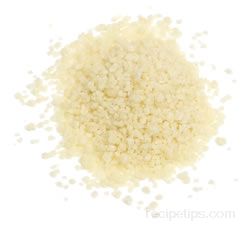
Couscous
|
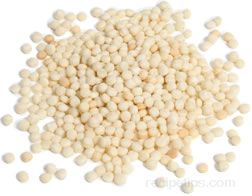
Israeli Couscous
|
|
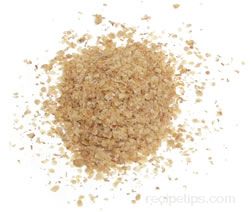
Wheat GermWheat germ is the embryo of the seed or kernel of wheat. It is located at the bottom center of the kernel next to the stem. The wheat germ is the section of the kernel that is able to sprout, becoming a new plant. It is the only part of the wheat kernel that contains fat. The wheat germ (and the remainder of the inner kernel) is covered by several thin fibrous layers that are known as the bran layers. Wheat germ is highly nutritious, providing protein, fat, vitamins, and minerals. During the production of some types of wheat flour, the germ is often removed. Highly refined white flour is one such variety of wheat flour that does not contain the germ. Whole-wheat flour is a type of wheat flour in which the germ is retained.
|
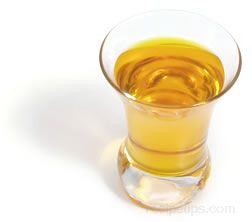 Wheat Germ Oil Wheat Germ Oil
Wheat germ oil is an edible oil that is extracted from the germ, or embryo, of the wheat kernel. It is a rich source of vitamin E and is often used as a health food supplement. It can also be used to create delicious salad dressings, and it is surprisingly good when it is added to freshly cooked pasta. Like other edible oils, it should be stored in a sealed container in a cool, dark location. Wheat germ oil is available in large well-stocked food stores, as well as in health food stores and natural food stores.
|
Seitan
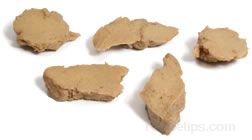
Seitan is a substance produced from wheat gluten. It is rich in protein and is commonly used in a number of vegetarian recipes. It has a firm, chewy meat-like texture. The flavor is rather bland and a neutral. The nondescript flavor of seitan allows it to readily absorb the flavors of other ingredients that may be combined with it in a recipe.
Seitan is available in square or rectangular wrapped cakes in the refrigerator section of Asian markets and health food stores. It is also sold in a powdered form called wheat gluten, which is mixed with water when used, but it does not have the chewy texture of the packaged seitan cakes. | |