General Guidelines | Degree of Doneness | Meat Thermometers
|
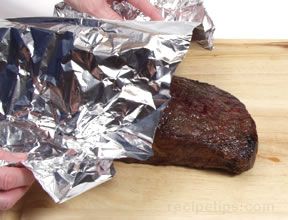
Even though harmful bacteria are usually only on the surface of whole beef cuts, there is growing concern that bacteria may be present in the internal portions of the meat as well, which is why it is now recommended that whole beef cuts be cooked to an internal temperature of not less than 145°F. Traditional guidelines for doneness state that beef cooked very rare, rare, or medium-rare should have an internal temperature ranging between 115ºF to 140°F. Many people prefer beef cooked rare (especially steak), but this decision is up to the consumer and is certainly not recommended by the USDA. It is important to remember that after a cut of beef is removed from the heat source, the internal temperature will continue to rise. Although thin beef cuts, such as steaks, are usually served within a short time after removal from a grill or broiler oven, thicker cuts, such as roasts, benefit from a "resting" period before slicing and serving. The resting period, which may range between 10 to 30 minutes, depending on the beef cut, allows the juices to redistribute and allows the internal temperature to rise because of residual heat. The internal temperature will increase 5º to 10ºF during the resting period, which allows the beef cut to be removed from the heat source when the internal temperature is lower than the desired doneness. A meat thermometer should be used to check the internal temperature of the meat to ensure proper doneness. |
| Whole beef cuts usually have bacteria only on the surface, but it is possible for harmful bacteria to be present in the internal portions, so cooking the meat to an internal temperature of 145°F is sufficient to kill the bacteria. (The surface of the meat will be at a much higher temperature; usually 160°F or above). | 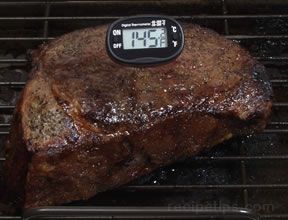 |
|
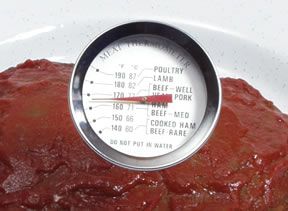
Bacteria such as E. Coli may be present on any cut of beef, but it is most common on ground beef because the grinding process may distribute the bacteria throughout the meat. Ground beef must be cooked until the internal temperature reaches a minimum of 160°F to ensure that dangerous bacteria are destroyed. Ground beef dishes, such as meatloaf, should be checked for doneness with a meat thermometer. This is especially important when the meat has been blended with dark sauces that can mask the color of the meat, making it difficult to determine if any pink color remains, which would indicate that the ground beef is not fully cooked. |
 |
|
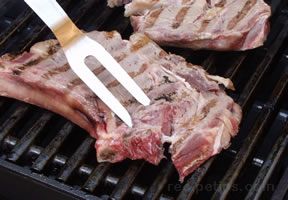
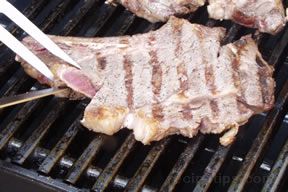
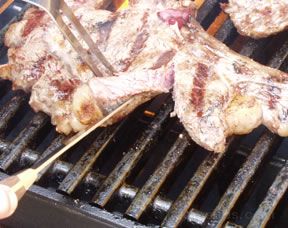
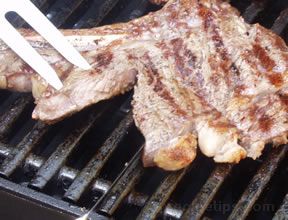
The following descriptions for doneness are demonstrated with a grilled beefsteak shown at varying stages of doneness. The same criteria for color, texture, juiciness, and internal temperature can be applied to beef cooked with other methods such as broiling, pan-frying, or roasting. The best method for determining the desired doneness is with the use of a meat thermometer. |
|
Very Rare Beef that is cooked very rare is placed on a hot grill for a few seconds, turned, cooked on the other side for a few additional seconds, and then removed from the grill. The process basically warms the meat. The meat will be soft and very juicy. The color of the center will be blood-red and the color will become bright pink toward the surface. The short cooking time results in a steak that is barely seared, but it will have light grill marks on the surface. Note: It may be risky to consume beef that is minimally cooked. |
|
Traditional Guidelines: 110ºF - 120ºF Updated Guidelines: Not Recommended |
|
The color of beef cooked rare is red in the center and gradually becomes pink away from the center. The meat is cooked very quickly. When grilled, the surface of the meat becomes a bit gray and has noticeable grill marks. The meat is juicy and tender. Note: It may be risky to consume beef that is minimally cooked. |
|
Traditional Guidelines: 120ºF - 130ºF Updated Guidelines: Not Recommended |
|
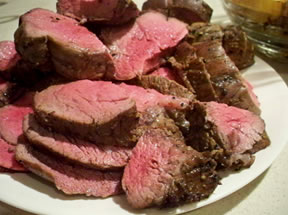
The color of medium-rare beef is mostly pink from the center outward with no blood-red areas and is gray-brown on the surface. The meat is tender, juicy, and flavorful. Because of the increased concern with harmful bacteria that may be present in beef, medium-rare (145ºF on a meat thermometer, using updated guidelines) is the minimum degree of doneness that is recommended. |
|
Traditional Guidelines: 130ºF - 140ºF Updated Guidelines: 145°F - 150ºF |
|
Medium doneness refers to beef that is a bit pink in the center and gradually becomes gray-brown toward the surface of the meat. When beef is grilled to medium doneness, the surface is nicely seared. The texture is firm, but the meat is still somewhat tender. A greater temperature range is used to describe beef cooked to medium than beef cooked to other stages of doneness. |
|
Traditional Guidelines: 140ºF - 150ºF Updated Guidelines: 150°F - 160ºF |
|
Beef cooked medium-well is mostly gray-brown throughout with a hint of pink in the center. The texture is firm and the meat has lost much of its juiciness, although it is not dry. The surface is nicely browned with a flavorful crust and if the meat is grilled, it has pronounced grill marks on the surface. |
|
Traditional Guidelines: 150ºF - 160ºF Updated Guidelines: 160°F - 170ºF |
|
Well-done beef is gray-brown throughout with no sign of pink in the center. The texture is chewy and fairly dry. The surface of the meat is crusty and flavorful. Results are better when using cuts of beef with plenty of marbling and natural juiciness. Lean cuts dry out quickly, but tenderizing (especially marinating) help to lessen the effect of cooking beef to the well-done stage. |
|
Traditional Guidelines: 160ºF and above Updated Guidelines: 170ºF and above |
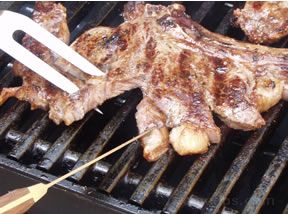
|
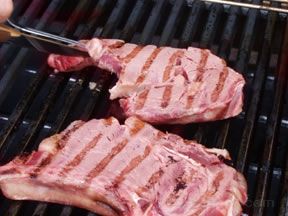
A meat thermometer can be used to verify that a cut of beef has reached the appropriate temperature according to the desired doneness. An ovenproof thermometer can be placed into a beef roast and remain there throughout the roasting process. Most instant read thermometers are not ovenproof, so they cannot remain in the roast during cooking. A meat thermometer should be inserted into the thickest portion of the meat. The thermometer should not be placed near a bone or in a fatty area, which will result in a temperature reading that is inaccurate in terms of proper doneness. After removing beef cuts from the oven, the temperature of the meat will rise 5°F to 10°F during the recommended 10 to 30 minute resting period, which should be allowed before carving. For this reason, beef should be removed from the heat source when the internal temperature has reached 5°F or 10°F below the optimum temperature for the desired doneness. |
|
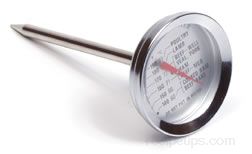
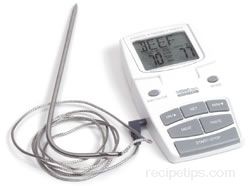
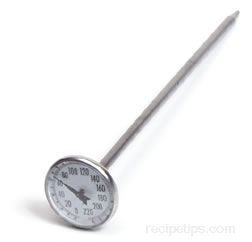
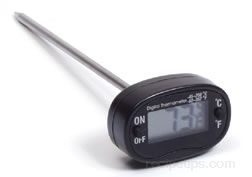
Types of Meat Thermometers Shown below are several varieties of | |
|
Dial Face Ovenproof |
Digital Instant Read Thermometer |
|
Dial Face Instant Read Meat Thermometer |
Digital Instant Read Thermometer |
|
Digital Instant Read Grill Fork Thermometer | |