|
Ham Cooking Tips
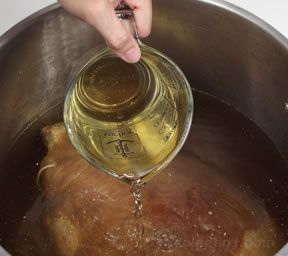
- Soak country hams prior to cooking to reduce their saltiness.
- To remove rind easily off from a cooked ham, slit the rind lengthwise down the ham before cooking and cook with the slit side down. Remove immediately after cooking and the rind should pull off easily.
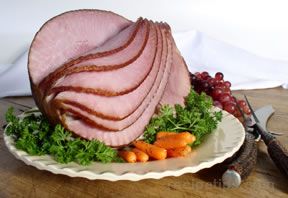
- It is best to serve country hams in very thin slices because of their very intense flavor and saltiness.
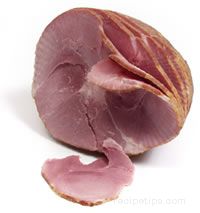
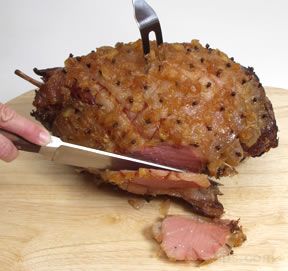
- Ham is easier to slice thin when it is cool.
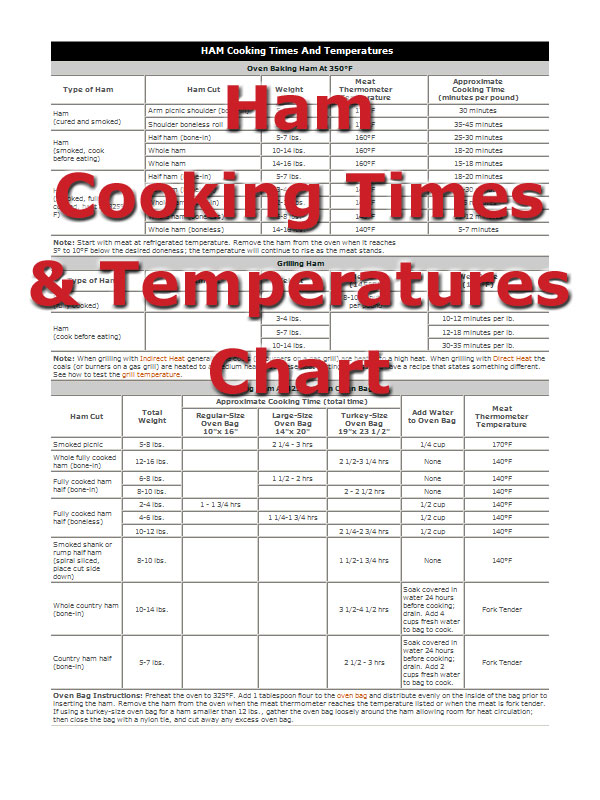
- Do not overcook ham or it will become dry and tough. The threat of trichinosis is eliminated when the ham is heated to 137°F, but the USDA recommends that uncooked pork should reach 160°F to be safe. Fully cooked ham should be cooked to 140° F to intensify its flavor and juiciness.
- Do not baste the ham with its juices as it is cooking because they are too salty and will only add more saltiness to the ham.
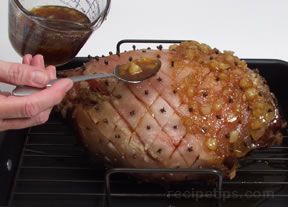
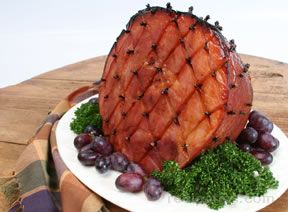
- Glazing the ham at the end of the cooking process adds flavor and a more appealing finished look to its appearance.
- Removing a canned ham is made easier by first placing the sealed can in hot water for 1 or 2 minutes. Open and slide the ham out.
Roasting/Baking Tips:
- To add extra flavor, apply a glaze to the ham during the last 30 minutes of the cooking time.
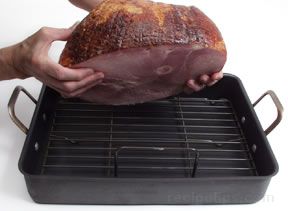
- Roasting at a lower oven temperature (NEVER roast meat below 200°F) will result in meat that is more flavorful and moist. It will take longer to cook but the results will be worth the wait.
- Do not use sharp utensils that may pierce the ham when trying to turn it because piercing allows valuable juices to escape. Use other utensils, such as wooden spoons and spatulas for handling the ham.
- If cooking more than one ham, be sure that there is uniform space around the hams so that they will cook evenly. The hams should not be touching and there should be enough space around them to allow air and heat to circulate.
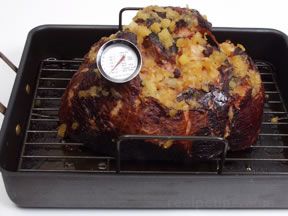
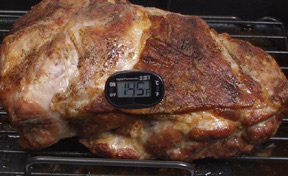
- When placing a thermometer in the meat to check for doneness, be sure that the stem is not touching a bone because this can result in a false reading.
Grilling Tips:
- Preheat grill or broiler to the proper temperature to ensure the meat surface is seared quickly to give it a flavorful crust.
- Using clean racks and coating them with vegetable oil or a nonstick vegetable oil spray will help prevent the meat from sticking.
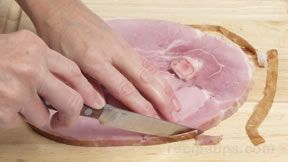
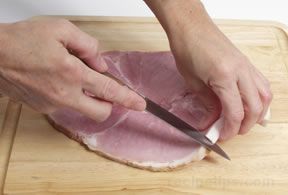
- To keep ham slices flat while grilling, clip fat around the edges at 1 to 1 ½ inch intervals.
- Do not use a fork to turn the ham as it cooks. The piercing causes juices to escape. Use tongs to turn.
- Keep an area in the charcoal grill empty of coals so if a flare up occurs or some of the meat is cooking to quickly, the meat can be moved to this area. On a gas grill, leave one burner on low.
|