
|
|
| back to Glossary Index |
 |
|
|
 |
|
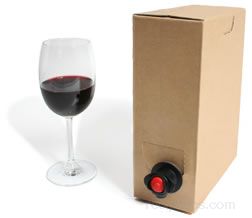
A form of packaged wine that uses a plastic or reinforced paper liner with a spigot to hold the wine within a corregated box instead of glass bottles as containers. Economical, convenient and shelf-stable are some terms used to describe the value Box Wine offers to the consumer. Since boxes are not as costly as glass and since shipping can be more easily accomplished with square rather than round shapes, the price of Boxed Wine is typically a more economical alternative. Some boxes hold 5 liters while others are made to contain only 1, 2 or 3 liters. As the wine is drawn out of the box, the bag collapses around the wine so air that may spoil the wine is continually kept from reaching the wine as quickly as it would if poured from a corked bottle. Air that does penetrate the plastic membrane does so very slowly so spoilage is reduced significantly.
Some of the key elements of Box Wine that initially made it less expensive included: 1) the soils used to raise the grapes; 2) the methods of harvesting; and 3) the aging process. Box Wine is made from grapes grown on quality soils, making it easier to grow vines with larger numbers of grapes. Since lighter soils provide more stress to grape vines resulting in more complex flavors from the grapes that do develop, the grapes grown for Box Wines are less complex, less flavorful, and generally require some sweetening to enhance the taste. Harvesting of grapes for Box Wine is undertaken with mechanization rather than hand gathering. Therefore, the inspection and rejection process are simplified and less intense to insure higher quality fruit. Aging of the wine is shortened if undertaken at all while some of the other processes are similarly lessened or eliminated since the grapes harvested for bulk wines are not as complex thus, requiring less of the classic wine development techniques employed on finer wines. However, as the interest and value of the product has grown with consumers, more wine manufacturers have begun to offer higher quality premium varietals in various types of boxes. Key to this offering is the ability to keep wine fresh for over a month, the portable aspect of taking wine to gatherings or events, and the savings in freight and packaging which have all encouraged continued use of the Cask Wines.
|
 |
|
|
 |
|
 |
 |
USDA Nutrition Facts |
 |
|
| Serving Size 1 serving |
 |
 |
 |
| Calories 500 |
 |
| Protein 4g |
 |
| Total Fat 26g |
 |
| Total Carbohydrates 61g |
 |
| Dietary Fiber 1g |
 |
| Sugars 28g |
 |
| Potassium 76mg |
 |
| Sodium 317mg |
 |
| Cholesterol 31mg |
 |
 |
 |
 |
|
|
| Serving Size 1 serving |
 |
 |
 |
| Calories 497 |
 |
| Protein 4g |
 |
| Total Fat 24g |
 |
| Total Carbohydrates 65g |
 |
| Dietary Fiber 2g |
 |
| Sugars 34g |
 |
| Potassium 127mg |
 |
| Sodium 270mg |
 |
| Cholesterol 13mg |
 |
 |
 |
 |
|
|
 |
|
Box or Cask Wine term - Related Content |
 |
 |
 |
 |
 |
|
 |
|
|
 |
|
 |
|
White wine produced from grapes that are kept on the vine until the first deep frost. Grapes are then typically pressed while still frozen. Discovered unexpectedly in Germany in ... |
|
 |
|
|
 |
|
 |
| Wine made from grapes that were harvested in a specific year. The date is denoted on the label of the wine. |
|
 |
|
|
 |
|
 |
| Wine made from basically one variety of grape. The wine is labeled for the single grape variety or the most prominent grape variety used to produce the wine. The flavor and other ... |
|
 |
|
|
 |
|
 |
| Descriptor of wine that has bubbles. The bubbles are created by carbon dioxide gas that has occurred naturally, through secondary fermentation, or has been added intentionally. |
|
 |
|
|
 |
|
 |
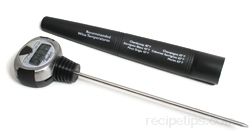
| Designed to measure the temperature of liquids, the Wine Thermometer is useful for keeping beverages at the ideal or the desired temperature. Built with electronic displays for ... |
|
 |
|
|
 |
 |
 |
 |
 |
|
 |
|
|
 |
|
 |
|
|
 |
|
 |
|
|
 |
|
 |
|
Before Opening
Wine to be consumed within a few weeks
Keep bottles in a cool, dry place away from direct sunlight and
... |
|
 |
|
|
 |
|
 |
|
Wine Tasting I: Assessing by AppearanceWine Tasting II: Assessing by SmellWine Tasting III: Assessing by Taste
Wine Tasting I: Assessing by Appearance
Serving ... |
|
 |
|
|
 |
|
 |
| "User Friendly" Wines
Gatherings of friends and family should be a time of celebration and enjoyment, not stress. The following is a general selection of wines that work with most ... |
|
 |
|
|
 |
 |
 |
 |
 |
|
 |
|
|
 |
|
 |
| Marinated steak strips served with or on sourdough bread. |
|
 |
 |
 |
|
 |
| When braised slowly in this tasty red wine sauce, an ordinary chuck roast becomes a tender, mouth-watering treat. |
|
 |
 |
 |
|
 |
| The flavors of fruit and wine blend well to make this dressing perfect for grilled halibut or other grilled fish recipes. |
|
 |
 |
 |
|
 |
| Great dressing for a salad of mixed greens or pears and blue cheese. |
|
 |
 |
 |
|
 |
| Enjoy more tender meat with an enhanced flavor when you use this marinade. |
|
 |
|
|
 |
 |
 |
 |
 |
|
 |
|
|
 |
|
 |
| RecipeTips.com's video demonstration, 'What to do with Leftover Wine,' is an easy-to-follow tips for what to do with leftover wine. |
|
 |
|
|
 |
 |
 |
 |
|
|
 |
|
|
|
|
|
|
|
|
 |
|
| Reproduction in whole or in part without written permission is strictly prohibited. |
| © Copyright 2008 Tecstra Systems, All Rights Reserved, RecipeTips.Com |
|
|
 |
|