
|
|
| back to Glossary Index |
 |
|
|
 |
|
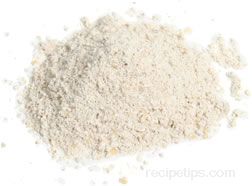
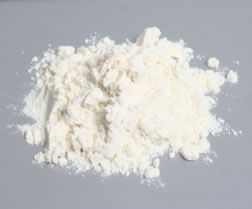
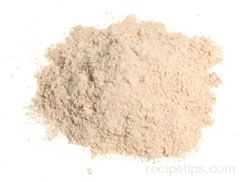
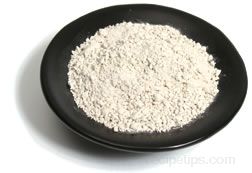
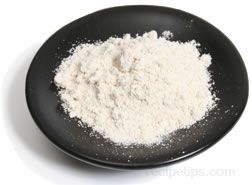
A type of flour made from barley grain. The flour is usually produced from “pearled” barley, which refers to barley that has been scoured and polished to remove the husk and the bran. After the malting process has removed the sugar and starch, the remaining barley (known as malted barley flour), is steam dried, milled, and sifted to provide the finished flour product.
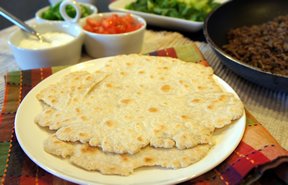
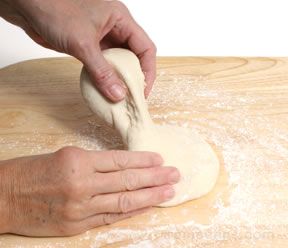
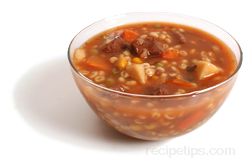
Although barley flour does contain some gluten (a protein that assists in making dough rise), it does not contain enough for dough to effectively rise, so gluten-rich flour, such as wheat flour, is often added to the barley flour. For various yeast breads, the quantity of barley flour that can be used is usually no more than 20% of the total quantity of flour used. For denser, flatter breads, a higher proportion of barely flour is used. When making bars, cookies, or quick breads, barley flour can be substituted for about half of the total amount of flour required. Baked goods, such as breads, made only of barley flour are overly moist and the texture is similar to dense cake. Barley flour also works well as an ingredient to thicken gravies, sauces, and stews.
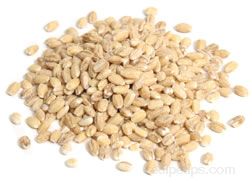
Barley flour can be purchased in large food stores or in natural food markets and specialty shops. Pearled barley can also be purchased and the flour can be ground at home using a coffee grinder. Be aware that freshly ground barley flour is difficult to properly measure immediately after it has been ground. One cup of flour may measure 2/3 cup after several days because of settling. Tapping the container of flour on the countertop will help to settle the flour to achieve a more accurate measurement.
Barley flour works well as an ingredient to thicken gravies, sauces and stews. When used for breads, it provides a texture similar a cake texture, high in moisture. Barley flour contains tannins, which may cause problems for anyone sensitive to tannins in baked goods. Barley flour is best when stored in the freezer compartment in a sealed container or tightly wrapped package.
|
 |
|
|
 |
|
 |
 |
USDA Nutrition Facts |
 |
|
| Serving Size 1 cup |
 |
 |
 |
| Calories 345 |
 |
| Protein 10g |
 |
| Total Fat 1g |
 |
| Total Carbohydrates 74g |
 |
| Dietary Fiber 10g |
 |
| Sugars 0g |
 |
| Potassium 309mg |
 |
| Sodium 4mg |
 |
| Cholesterol 0mg |
 |
 |
 |
 |
|
|
 |
|
Barley Flour term - Related Content |
 |
 |
 |
 |
 |
|
 |
 |
 |
|
 |
| Browse our selection of cake recipes for birthdays or any occassion. |
|
 |
 |
 |
|
 |
 |
 |
|
 |
|
|
 |
 |
 |
 |
 |
|
 |
|
|
 |
|
 |
| A type of corn that is grown solely as a source for the production of corn flour. The kernels are starchy and much softer than other types of corn, which allows flour milling to ... |
|
 |
|
|
 |
|
 |
| A utensil most often associated with baking activities that allows fine or coarse ground substances to be sifted and spread over a variety of surfaces when preparing foods. Also ... |
|
 |
|
|
 |
|
 |
| A grain syrup and food sweetener made from sprouted barley that has limited use in general baking. It is used more often for the production of beverages, such as beer, due to the ... |
|
 |
|
|
 |
|
 |
| A form of barley that has been processed to remove only the outside hull and is also known as hulled barley. Barley groats are very nutritious and are rich in fiber, but require ... |
|
 |
|
|
 |
|
 |
| 1. A product created by grinding and sifting various types of substances, such as grains, legumes, nuts, and some vegetables into a powdered form that varies from very soft to ... |
|
 |
|
|
 |
 |
 |
 |
 |
|
 |
|
|
 |
|
 |
| Tips - Home Flour Milling | Substitutions
Tips - Home Flour Milling
Amaranth Flour
Amaranth seeds are very small so they are difficult to grind into flour with ... |
|
 |
|
|
 |
|
 |
| Nutritional Advantages | All About Gluten
Nutritional Advantages of Various Types of Flour
Most types of flour are composed mainly of carbohydrates, but the ... |
|
 |
|
|
 |
|
 |
|
Most types of flour keep well in a sealed container in a cool, dry, and dark location. The original paper packaging used for many types of flour is fine for long term ... |
|
 |
|
|
 |
|
 |
| Flour Used as a Thickening Agent | Frying | Deep-Frying | Baking
Flour Used as a Thickening Agent
Flour is one of the most often used thickening agents when ... |
|
 |
|
|
 |
|
 |
| Hot Liquid Cooking Techniques for Grain | Cooking Barley
The three basic techniques for cooking barley with hot liquid are boiling, absorption, and steaming, which are ... |
|
 |
|
|
 |
 |
 |
 |
 |
|
 |
 |
 |
|
 |
| Light and crispy, this cracker or flat bread recipe is great to serve when needing a delicious tasting appetizer or garnish for soups, salads and chilies. |
|
 |
 |
 |
|
 |
| Crisp and salty, this crisp goes well with soups, stews and salads. |
|
 |
 |
 |
|
 |
| Fresh and satisfying salad |
|
 |
 |
 |
|
 |
| Wonderful side dish that goes great with any roasted meat. |
|
 |
|
|
 |
 |
 |
 |
|
|
 |
|
|
|
|
|
|
|
|
 |
|
| Reproduction in whole or in part without written permission is strictly prohibited. |
| © Copyright 2009 Tecstra Systems, All Rights Reserved, RecipeTips.Com |
|
|
 |
|