
| back to Glossary Index |
 |
|
|
 |
|
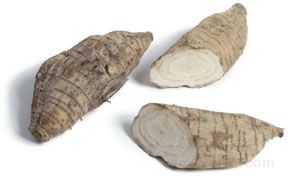
A tuber, common in Asia, Africa, and many tropical countries, that can range in size from several ounces to over 100 pounds. Yam is a term that is often used when referring to various types of sweet potatoes, such as a Louisana yam, an orange-fleshed sweet potato. For marketing purposes, several Louisana varieties such as the Red Garnet were labeled as "yams" to distinguish them from other varieties of sweet potatoes. However, a true yam which is not related to the sweet potato, is very different in taste and shape. It is a hearty tuber that does not have the sweeter taste of a sweet potato, but instead may have flavors that range from bland to earthy, slightly smoky in taste, or nutty and only moderately sweet. The shape of the yam can be oblong, tapered or round with a thick outer skin that is dark brown and bark-like, ranging from smooth to shaggy in appearance. Their dense flesh can be an off-white color to pale yellow or slightly pinkish orange with a very starchy texture.
Select yams that are not discolored, bruised, or soft to the touch. They should not show signs of distress or mold.
To prepare, a yam must be peeled with a knife, to remove its bark-like skin. After peeling, submerge the white flesh in cold water to keep it from turning dark in color. Cut the yam into pieces or slices and place in boiling salt water to be blanched for approximately 15 minutes or so. Since they are similar to potatoes, yams can be prepared using many of the same methods used for sweet potatoes. When cooked, various varieties of yams develop a somewhat creamy flesh while other varieties remain firm. All yams absorb liquids exceptionally well, so after cooking, their flavor can be enhanced easily by adding flavorful seasonings, spicy or mustard sauces, or various dressings.
Store yams in cool dry areas to decrease the chance of molding and spoilage. Yams stored in plastic containers or plastic bags will also spoil easily if condensation is allowed to form, so keep the yams in areas providing a sufficient flow of air.
The yam is also known as true yam, greater yam, cush-cush, igname, mapuey, name yam, nyami tropical yam, and yampi. The "Name" Yam is pronounced "ny-AAH-MAY".
|
 |
|
|
 |
|
 |
 |
USDA Nutrition Facts |
 |
|
| Serving Size 1 cup, cubes |
 |
 |
 |
| Calories 82 |
 |
| Protein 1g |
 |
| Total Fat 8g |
 |
| Total Carbohydrates 19g |
 |
| Potassium 495mg |
 |
| Sodium 248mg |
 |
| Cholesterol 0mg |
 |
 |
 |
 |
|
|
| Serving Size 1 cup, cubes |
 |
 |
 |
| Calories 114 |
 |
| Protein 1g |
 |
| Total Fat 0g |
 |
| Total Carbohydrates 26g |
 |
| Dietary Fiber 3g |
 |
| Sugars 0g |
 |
| Potassium 670mg |
 |
| Sodium 244mg |
 |
| Cholesterol 0mg |
 |
 |
 |
 |
|
|
| Serving Size 1 cup, cubes |
 |
 |
 |
| Calories 116 |
 |
| Protein 1g |
 |
| Total Fat 0g |
 |
| Total Carbohydrates 27g |
 |
| Dietary Fiber 3g |
 |
| Sugars 0g |
 |
| Potassium 670mg |
 |
| Sodium 8mg |
 |
| Cholesterol 0mg |
 |
 |
 |
 |
|
|
 |
|
Yam term - Related Content |
 |
 |
 |
 |
 |
|
 |
 |
 |
|
 |
| Cranberries provide color and tartness to this festive yam dish. Don’t wait for the Holidays to serve this tasty favorite. |
|
 |
|
|
 |
 |
 |
 |
 |
|
 |
|
|
 |
|
 |
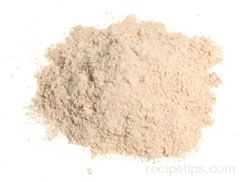
| A type of flour produced by grinding dried yams into a powder. A yam is a hearty tuber that does not have the sweet taste of a sweet potato, but instead may have flavors that ... |
|
 |
 |
 |
|
 |
| A tuber which is common in Asia, Africa, and many tropical countries, that can range in size from several ounces to over 50 pounds. Yam is the term that is often used to refer to ... |
|
 |
|
|
 |
|
 |
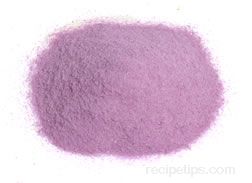
| A variety of a true yam, which is known as “ube” or “ubi” in the Philippines. It has rough textured, dark colored skin and a light purple colored flesh. Purple yam is very ... |
|
 |
|
|
 |
 |
 |
 |
|
|
 |
|
|
|
|
|
|
|