
RecipeTips.Com Home glossary | F | Flour
Join Now | Sign In | RSS Feeds RSS Feeds
Flour: Cooking Terms: RecipeTips.com
Recipes Cooking Tips & Advice Glossary Community Videos
Can I get Swine Flu by eating pork?
hints
e-Newsletter
RecipeTips.com Newsletter Sign Up
back to Glossary Index

Flour

print Print Flour term  |  email Email Flour term  |  rate this term Rate this term  |  share Share
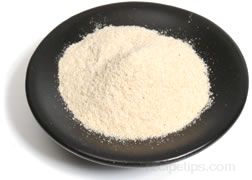
1. A product created by grinding and sifting various types of substances, such as grains, legumes, nuts, and some vegetables into a powdered form that varies from very soft to coarse in texture. It is used as the main ingredient for making many breads, cakes, pastries, and other types of baked goods. Wheat, which is milled into a wide range of flours including all-purpose flour, bread flour, cake flour, and whole-wheat flour is the most commonly used grain for flour production in many parts of the world. Other grains and seeds used for flour production include rice, rye, barley, corn, millet, amaranth, quinoa, buckwheat, oats, and many others, but wheat flour is used to such an extent that it is usually understood that the word flour refers to wheat flour (especially in Western countries). Other types of flour are usually labeled as “barley flour,” “rye flour,” and so on. Some types of flour may be preferred over wheat flour or are more commonly used depending on the location and/or the availability of wheat. Rye flour, for example, is very popular in northern and eastern European countries where wheat does not grow well. Rice flour is popular in many Asian countries and teff flour is one of the most important staple food items in Ethiopia.

When wheat flour is mixed with liquid, gluten is formed. Gluten is the substance that provides dough with elasticity and the ability to stretch as the leavening agent produces carbon dioxide gas, which enables the dough to rise effectively. This characteristic has resulted in the universal popularity of wheat flour varieties. The more protein in the flour (as is the case with hard wheat flour), the more gluten is formed when the flour is mixed with liquid. However, some recipes require that baked items not rise excessively, so using flour with less gluten forming capability (soft wheat varieties) is better for this purpose.

Wheat flour (especially all-purpose flour) is available in bleached and unbleached varieties. Bleaching is a process used by millers to quickly increase the whiteness of the flour. Over time, flour oxidizes and whitens naturally, but chemical agents are used to speed the process in order to eliminate the long waiting period that was traditionally required. It is required that flour treated chemically for the purpose of bleaching must be labeled “Bleached Flour.”

It is wise to use flours specifically formulated for various baked goods, such as bread flour or cake flour, although all-purpose flour is suitable for a majority of items. In fact, many recipes calling for wheat flour as an ingredient, suggest the use of an all-purpose flour, which is a heat processed, steel-ground blend of both soft wheat and hard wheat.

Bread flour is a variety of wheat flour produced from hard wheat, making it high in gluten and very effective for yeast bread while cake and pastry flours are made from a low protein, soft wheat, so the flour contains less gluten. This results in lighter, less dense textures (a tender crumb) for various cake and pastry items.

Enriched flours are those that have been processed from grain to remove the amino acids and nutrients, bleached to whiten the appearance, and then reformulated with nutrients, such as thiamin, riboflavin, niacin, Vitamin D, iron, and calcium added in accordance with established government guidelines. Enriched flour does not contain the bran or germ, so it is necessary to add nutrients.

Instant flour is a type that dissolves easily in liquids that range from cold to hot in temperature. This type of flour is most often used when gravies, sauces, soups, and other food items require thickening.

Gluten flour is the type most often used as an additive for varieties of flour that are low in gluten. It is made from hard wheat and has been processed to remove the starch so that the gluten content is of a higher proportion.

Self-rising flour is all-purpose flour that has been processed by adding salt and baking powder (leavening). It can be easily prepared at home by adding 1½ teaspoons of baking powder and a ½ teaspoon of salt to 1 cup of all-purpose flour.

Whole-wheat flour refers to flour made from the entire kernel of wheat, which includes the bran and germ. This creates flour that is more nutritious for baked goods. Whole-wheat flour may also be referred to as graham flour (although there are some differences) or entire wheat flour.

Graham flour, named after the Rev. Sylvester Graham who developed the flour, is a type of wheat flour that is slightly coarser than regular flour. The flour is often confused with standard whole-wheat, but there are some differences. In Graham flour, coarsely ground flakes of bran are added and the wheat germ is usually removed to lengthen the shelf life of the flour. Graham flour is most often used in the production of Graham crackers.

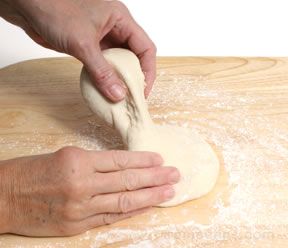
2. To dust or spread a light coating of fine ground flour over a surface, a utensil, a pan, or a food in order to prevent items from sticking together or to create a browned surface on foods during a cooking process. For example, to prevent dough from sticking to a surface on which it will be worked, flour is spread on the work surface to prevent the dough from sticking as it is rolled and kneaded. Coating foods with flour prior to frying helps to create a golden brown surface on the food as it fries. Some ready-to-eat foods, such as candied fruits, are also coated with flour to keep them from sticking together.

Amaranth Flour
Amaranth Flour
Barley Flour
Barley Flour
Millet Flour
Millet Flour
White Rice Flour
White Rice Flour
All-purpose Flour
All-purpose Flour
Graham Flour
Graham Flour

USDA Nutrition Facts

Fast foods, hotdog, with corn flour coating (corndog) (USDA#21120)

Serving Size 1 sandwich
Calories 263
Protein 9g
Total Fat 10g
Total Carbohydrates 31g
Potassium 150mg
Sodium 556mg
Cholesterol 45mg

Wheat flour, white (industrial), 15% protein, bleached, unenriched (USDA#20646)

Calories 362
Protein 15g
Total Fat 1g
Total Carbohydrates 69g
Dietary Fiber 2g
Sugars 0g
Potassium 120mg
Sodium 2mg
Cholesterol 0mg

Wheat flour, white (industrial), 15% protein, bleached, enriched (USDA#20645)

Calories 362
Protein 15g
Total Fat 1g
Total Carbohydrates 69g
Dietary Fiber 2g
Sugars 0g
Potassium 120mg
Sodium 2mg
Cholesterol 0mg

Flour term - Related Content

Collections
Cake Recipes

Cake Recipes

Browse our selection of cake recipes for birthdays or any occassion.
Cookie Recipes

Cookie Recipes

Browse our cookie recipes, we have a lot to choose from.
Bars

Bars

View our fabulous assortment of bar recipes.
Glossary Terms
Flour Corn

Flour Corn

A type of corn that is grown solely as a source for the production of corn flour. The kernels are starchy and much softer than other types of corn, which allows flour milling to ...
Flour Duster or Wand

Flour Duster or Wand

A utensil most often associated with baking activities that allows fine or coarse ground substances to be sifted and spread over a variety of surfaces when preparing foods. Also ...
Yam Flour

Yam Flour

A type of flour produced by grinding dried yams into a powder. A yam is a hearty tuber that does not have the sweet taste of a sweet potato, but instead may have flavors that ...
Triticale Flour

Triticale Flour

A type of flour ground from a high protein man-made grain produced by crossbreeding wheat and rye. Pronounced “trit-i-KAY-lee”, the name is a combination of the Latin botanical ...
Kamut® Flour

Kamut® Flour

The brand name for a type of flour milled from grain that is closely related to durum wheat and is often considered a specialty grain. Kamut is often ground, packaged, and sold as ...
Cooking Tips & Advice
Flour Tips and Substitutions

Flour Tips and Substitutions

Tips - Home Flour Milling | Substitutions Tips - Home Flour Milling Amaranth Flour Amaranth seeds are very small so they are difficult to grind into flour with ...
Flour Nutritional Facts

Flour Nutritional Facts

Nutritional Advantages | All About Gluten   Nutritional Advantages of Various Types of Flour Most types of flour are composed mainly of carbohydrates, but the ...
Flour Storage Guide

Flour Storage Guide

Most types of flour keep well in a sealed container in a cool, dry, and dark location. The original paper packaging used for many types of flour is fine for long term ...
Flour Cooking Guide

Flour Cooking Guide

Flour Used as a Thickening Agent | Frying | Deep-Frying | Baking   Flour Used as a Thickening Agent Flour is one of the most often used thickening agents when ...
Measuring Flour

Measuring Flour

Individual graduated dry measuring cups are used to measure large quantities of flour while measuring spoons can be used to measure the smallest quantities. When ...
Recipes view more
Flour Tortilla Crisps with Parmesan

Flour Tortilla Crisps with Parmesan

Light and crispy, this cracker or flat bread recipe is great to serve when needing a delicious tasting appetizer or garnish for soups, salads and chilies.
Flour Tortilla Crisps with Garlic

Flour Tortilla Crisps with Garlic

Crisp and salty, this crisp goes well with soups, stews and salads.
Advertise With Us ADVERTISEMENT
Greenback Street - Save Money!
Clip and save Coupons available
Daily Feature
Homemade  Ice Cream - Strawberry Recipe
view past daily features
Party Planner
RecipeTips.Com Home glossary | F | Flour
Join Now | Sign In | RSS Feeds RSS Feeds
Reproduction in whole or in part without written permission is strictly prohibited.
© Copyright 2009 Tecstra Systems, All Rights Reserved, RecipeTips.Com