
|
|
| back to Glossary Index |
 |
|
|
 |
|
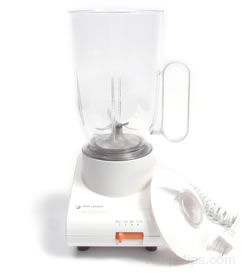
An electric kitchen appliance that is used basically to emulsify, liquify or puree. Although it can be used to chop or slice ingredients, a Blender does not provide consistent results as well as a food processor can for those types of tasks. Similarly, it may used to grate foods, but this chore is also best handled by a food processor. A Blender typically consists of a tall glass or plastic food container with a removable lid made with a filler hole for adding ingredients. At the base of the food container there are motor driven blades that blend, chop, mix, or liquefy foods depending on the speed setting selected.
When selecting a Blender, consider the type of food container desired, since glass is less likely than plastic to retain the aroma of various foods. The size of the container is also important, so it should be large enough to hold common contents for the foods most often blended and the number of people most often served. The frequency of tasks such as chopping ice for beverages, mixing beverage ingredients, and blending ingredients for food preparation should be considered when determining the size of the container desired. The Blender should have a weighted base that will keep it stable when the blades are activated as it blends different contents. Power is another consideration, making sure it is sufficient for the blending activities anticipated. Blenders with a wattage of 350 watts or higher are best for a wide variety of tasks, but don't use wattage as a means to evaluate effectivness of the Blender as higher wattage does not mean better blending results. Blenders have significant power for all blending tasks, but it is best not to run the Blender continually as constant power to the unit will only serve to wear the motor down. Instead, use short bursts of power to blend the contents thoroughly, allowing the motor to run only 5 to 10 seconds.
When considering the power range of the Blender, check the power settings, also known as speeds to determine which settings will be best for the food tasks most often required. Blenders generally are built with 3 to 12 speeds. The highest speed typically is used to crush harder items such as ice and the slower speeds are used for more delicate tasks. The Blender may also have a High and Low setting allowing for more speed settings to be deployed such as is possible on 16 to 18 speed Blenders.
|
 |
|
|
 |
|
 |
 |
USDA Nutrition Facts |
 |
|
| Serving Size 1 tablespoon |
 |
 |
 |
| Calories 718 |
 |
| Protein 0g |
 |
| Total Fat 80g |
 |
| Total Carbohydrates 0g |
 |
| Dietary Fiber 0g |
 |
| Sugars 0g |
 |
| Potassium 37mg |
 |
| Sodium 28mg |
 |
| Cholesterol 88mg |
 |
 |
 |
 |
|
|
 |
 |
 |
| Calories 81 |
 |
| Protein 5g |
 |
| Total Fat 1g |
 |
| Total Carbohydrates 11g |
 |
| Dietary Fiber 2g |
 |
| Sugars 6g |
 |
| Sodium 159mg |
 |
| Cholesterol 9mg |
 |
 |
 |
 |
|
|
| Serving Size 12 fl oz cup |
 |
 |
 |
| Calories 169 |
 |
| Protein 3g |
 |
| Total Fat 5g |
 |
| Total Carbohydrates 25g |
 |
| Dietary Fiber 0g |
 |
| Sugars 21g |
 |
| Potassium 198mg |
 |
| Sodium 75mg |
 |
| Cholesterol 15mg |
 |
 |
 |
 |
|
|
 |
|
Blender term - Related Content |
 |
 |
 |
 |
 |
|
 |
|
|
 |
|
 |
| Term used to describe the process of blending two or more wine varieties, wine types, wine lots, or wine vintages with the goal of creating one balanced and complex wine. |
|
 |
|
|
 |
|
 |
| The process of combining two or more ingredients together so that they lose their individual characteristics and become smooth and uniform. For example, cake batter is the result ... |
|
 |
|
|
 |
|
 |
| A hand-held kitchen utensil that serves to blend, whip, whisk, chop, or slice small food items. The Immersion Blender, also known as a Hand Blender, is a good option for small ... |
|
 |
|
|
 |
|
 |
| Several varieties of peppercorn berries picked at different times, dried by using different drying processes resulting in distinctively different flavors, and mixed together to ... |
|
 |
|
|
 |
|
 |
| The blended vinification of various grape varietals for the purpose of creating a single wine. Also indicates a wine produced by the process of “assemblage”. |
|
 |
|
|
 |
 |
 |
 |
|
|
 |
|
|
|
|
|
|
|
|
 |
|
| Reproduction in whole or in part without written permission is strictly prohibited. |
| © Copyright 2008 Tecstra Systems, All Rights Reserved, RecipeTips.Com |
|
|
 |
|