
RecipeTips.Com Home cooking terms | B | Beef
Join Now | Sign In | RSS Feeds RSS Feeds
Beef: Cooking Terms: RecipeTips.com
Recipes Cooking Tips & Advice Glossary Community Videos
hints
e-Newsletter
RecipeTips.com Newsletter Sign Up
back to Glossary Index

Beef

print Print Beef term  |  email Email Beef term  |  rate this term Rate this term  | Bookmarks
A type of red meat cut from carcasses of cattle that are raised, butchered, and processed for human consumption. Some of the common registered beef breeds listed in order of the numbers registered include: Angus, Hereford, Polled Hereford, Charolais, Shorthorn, Santa Gertrudis, Brahman, Brangus, and Red Angus. Speciality breeds are also being developed that are used for breeding stock to improve characteristics of other breeds and as food stock to be raised for providing higher quality meat cuts. Examples of some of the cattle breeds being raised as breed stock include Simmental, Gelbvieh, Fleckvieh, Limousin and Chianina, while Wagyu is an example of a breed being raised as a higher quality food stock.

Cuts of beef are obtained from a cow (female that has delivered a calf), a heifer (female that has not delivered a calf), a young steer (castrated male), or a bull (less than 2 years old). Each main beef cut is known as a primal cut, which consists of groups of muscles from the same area of the carcass. Primal cuts are also called wholesale cuts, because they are usually sold to meat markets to be cut into smaller beef cuts for sale to the consumer. An example of a primal cut is the short loin. Smaller cuts of beef are taken from the primal cuts and are known as subprimal cuts. An example of a subprimal cut is the tenderloin, which is cut from the short loin. The subprimal cuts of beef can yield still smaller cuts such as filet mignon steaks from the tenderloin. Many of the subprimal cuts of beef, and the smaller cuts obtained from them, are known as consumer cuts, retail cuts, or market ready cuts.

Beef cuts may consist of a single muscle, such as the tenderloin, while others may be a cross section of several muscles. A Porterhouse steak, for example, is a cross section of parts of the top loin and tenderloin muscles. Many cross section cuts include some bone.

Cuts of beef that are obtained from the center of the animal, such as the loin and rib area, are the most tender. This is because the muscles in the loin and rib areas are suspension muscles and do not move as much as the muscles in the front and rear portions of the animal, which are responsible for locomotion. Beef cuts obtained from locomotion muscles are lean, but much tougher than suspension muscles.

Various cuts of beef may differ in name between different countries and even in different regions of the same country, so it can be confusing. For example, in the United States, the rear section of the carcass is known as the round, but in Canada, the same section is called the hip.

Cuts of American beef are graded by government (USDA) standards and labeled with one of the following designations: Prime, Choice, Select, Standard, Commercial, Utility, and Cutter/Canner. A number of factors are considered when beef is graded, such as the texture of the meat, the quantity of fat within the meat, and the proportion of bone in relation to the meat. Prime grades are available to restaurants and some food markets, while Choice, Select, and Standard cuts are commonly available in many food stores. Commercial, Utility and Cutter/Canner grades are most often processed for use in manufacturing a variety of canned and packaged meat products such as luncheon meat, sausages, and jerky.

As a guide for selecting beef, lean boneless cuts yield up to 4 servings per pound while beef cuts with some bone yield up to 3 servings per pound. Bony cuts yield no more than 1 ½ servings per pound. One serving of a rib roast is equal to half a rib, so if you will be serving 8 people, a 4 rib roast should be purchased. 16 ounces (one pound) of ground beef produces about 4 cooked 3-ounce servings, which is the serving size recommended for a healthy diet.

When thawing beef, it is easier to cut it before it is fully defrosted. After cutting, the beef should be refrigerated until it has fully thawed. Fresh raw beef that has not been frozen can be placed in the freezer for a few minutes to firm it up a bit, making slicing much easier. Beef that is not fully defrosted should not be cooked because the exterior of the beef may become overdone before the interior has had a chance to cook to the proper temperature.

Aged beef is a product that has been specially processed and stored to improve the flavor and texture of the meat. Typically, sides of beef or primal cuts are selected for aging, which involves placing the meat in refrigerated temperatures that average approximately 35ºF/1.66ºC for 4 to 6 weeks. In controlled refrigeration, moisture within the meat begins to evaporate while the enzymes within the flesh soften the connective tissues. Thus, the flavor of the meat is improved as the meat becomes increasingly tender. Due to the wide ranges of temperature and humidity that may be present in consumer level refrigerators, aging beef in this manner at home is not recommended.

When cooking beef, the USDA recommends that whole beef cuts be cooked to a safe internal temperature of not less than 145°F/62.77ºC. Traditional guidelines usually state that medium rare beef should be cooked to an internal temperature of no higher than 130°F/54.4ºC, but with increased concern over bacteria that may be present in the internal portions of beef, it may be risky to consume beef that has not cooked to a minimum internal temperature of 145°F/62.77ºC.

Beef Chuck Eye Roast
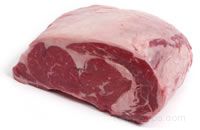
Beef Rib Roast
Beef Rib Roast
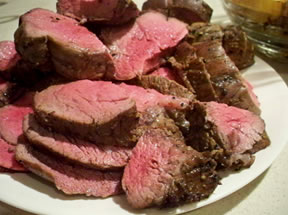
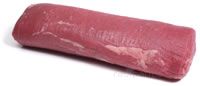
Beef Tenderloin Roast
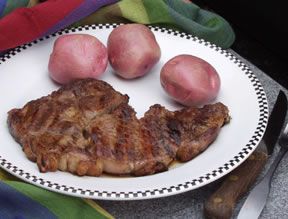
Beef Round Steak
Beef Round Steak
Beef Skirt Steak
Beef Skirt Steak

USDA Nutrition Facts

Beef, corned beef hash, with potato, canned (USDA#22908)

Calories 164
Protein 8g
Total Fat 10g
Total Carbohydrates 9g
Dietary Fiber 1g
Sugars 0g
Potassium 172mg
Sodium 425mg
Cholesterol 32mg

Beef, cured, corned beef, brisket, cooked (USDA#13347)

Serving Size 1 piece, cooked, excluding refuse (yield from 1 lb raw meat with refuse)
Calories 251
Protein 18g
Total Fat 18g
Total Carbohydrates 0g
Dietary Fiber 0g
Sugars 0g
Potassium 145mg
Sodium 1134mg
Cholesterol 98mg

Beef, cured, corned beef, brisket, raw (USDA#13346)

Serving Size 1 oz
Calories 198
Protein 14g
Total Fat 14g
Total Carbohydrates 0g
Dietary Fiber 0g
Potassium 297mg
Sodium 1217mg
Cholesterol 54mg

Beef term - Related Content

Collections
Ground Beef Recipes

Ground Beef Recipes

Our collection of ground beef recipes will give you ideas for a great weeknight meal.
Recipes view more
Beef Tacos with Onion Jam and Horseradish Cream

Beef Tacos with Onion Jam and Horseradish Cream

A British variation on a Mexican favorite—the traditional beef and horseradish of England becomes part of a Mexican taco filled with a tasty onion jam that makes the flavor of this beef taco recipe so distinctive.
Beef and Biscuit Bake

Beef and Biscuit Bake

A clever way to use simple ingredients to create an easy to prepare, rib-sticking main dish.
Beef Crostini with Red Pepper Mayonnaise

Beef Crostini with Red Pepper Mayonnaise

The flavor of the roasted red pepper and basil pairs well with the beef tenderloin in this wonderful Italian style hors d’ oeuvre.
Beef Fajitas

Beef Fajitas

Fresh ingredients and a mildly flavored marinade highlight these wonderful, easy to prepare wraps filled with grilled beef, onions, and peppers.
Beef or Lamb Tagine

Beef or Lamb Tagine

A moist and flavorful way to prepare beef or lamb with tasty vegetables.
Cooking Tips & Advice
Beef Cooking Times

Beef Cooking Times

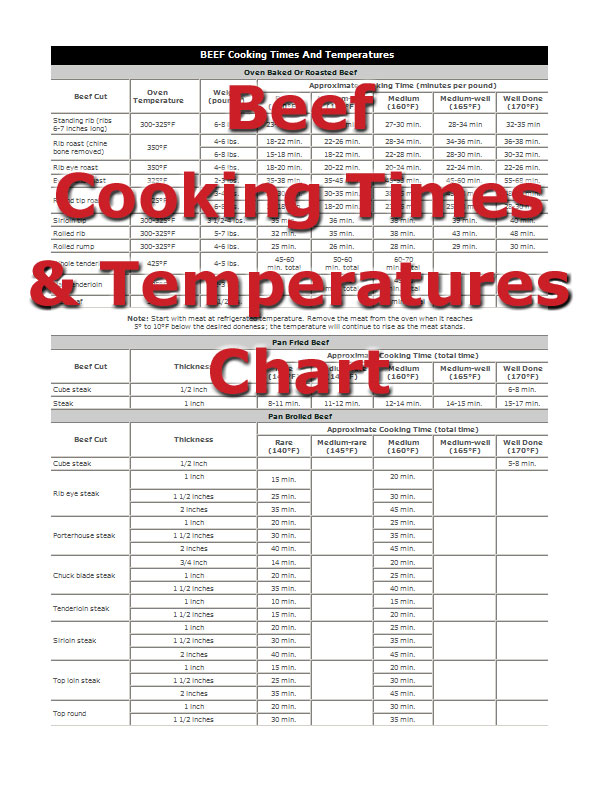
Beef cooking temperatures are important to monitor in order to insure meat is safely cooked to the proper temperature. When preparing beef, use the chart below as a guide to ...
Beef Rotisserie Cooking

Beef Rotisserie Cooking

General Guidelines | Charcoal Grill | Gas Grill | Doneness Rotisserie cooking requires three key components: The spit assembly, a means to turn the spit, and a heat ...
Beef Recipes

Beef Recipes

Beef Article
Beef Doneness

Beef Doneness

General Guidelines | Degree of Doneness | Meat Thermometers General Guidelines Even though harmful bacteria are usually only on the surface of whole beef cuts, there ...
Beef Cooking Introduction

Beef Cooking Introduction

In order to cook beef properly, the appropriate cooking method should be selected for each type of beef cut. For example, if you plan on using grilling as a cooking method, a ...
Glossary Terms
Beef Loaf

Beef Loaf

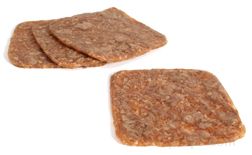
A sandwich meat that is made with cooked beef shavings encased in gelatin and formed into a rectangular-shaped loaf approximately 12 inches in length that is typically 4 inches ...
Beef Noodle Soup

Beef Noodle Soup

A hearty noodle soup made from a combination of egg noodles, small chunks of beef, beef stock, and seasonings. Beef Noodle Soup provides a beefy flavor enhanced with the addition ...
Beef Barley Soup

Beef Barley Soup

Hearty and quite filling, this savory soup can be be served as a main meal for lunch due to the quantity of ingredients typically added to the soup. Most often Beef Barley Soup ...
Beef Chuck

Beef Chuck

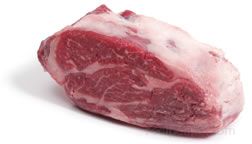
The area of a steer that extends from the neck to the fifth rib of the chest cavity. Included in the Beef Chuck is the meat extending from the shoulder to the arm most often ...
Beef Stew

Beef Stew

A food dish that combines beef with a variety of other ingredients, such as potatoes, vegetables, herbs, spices, and broth to create a savory dish, rich in flavor and often served ...
Summer Of Grilling Giveaway
Advertise With Us ADVERTISEMENT
Daily Feature
Grilled Fiesta Barbecued Chicken Salad Recipe
view past daily features
Party Planner
RecipeTips.Com Home cooking terms | B | Beef
Join Now | Sign In | RSS Feeds RSS Feeds
Reproduction in whole or in part without written permission is strictly prohibited.
© Copyright 2008 Tecstra Systems, All Rights Reserved, RecipeTips.Com